

Your Chevrolet Camaro wasn’t built to sit still. Whether it’s a ’69 split-bumper hiding under a tarp or a ’71 RS gathering dust in a Dallas garage, that car was made to run. And today, more owners than ever are choosing to build their classic Camaros into something the factory never imagined: a restomod.
A restomod Camaro keeps those iconic lines while swapping in a modern drivetrain, better suspension, and real comfort. Think of it as honoring the soul of the car while giving it the muscle to keep up with traffic, the brakes to stop when it needs to, and the A/C to survive a Texas summer.
Here’s what’s actually popular in Camaro restomods right now and how to make smart decisions about your build.

Why First-Gen Camaros Dominate the Restomod World
Walk through any car show parking lot or scroll through Bring a Trailer listings, and you’ll notice that first-generation Camaros (the 1967 Chevrolet Camaro, 1968, and 1969 models) make up the vast majority of restomod builds.
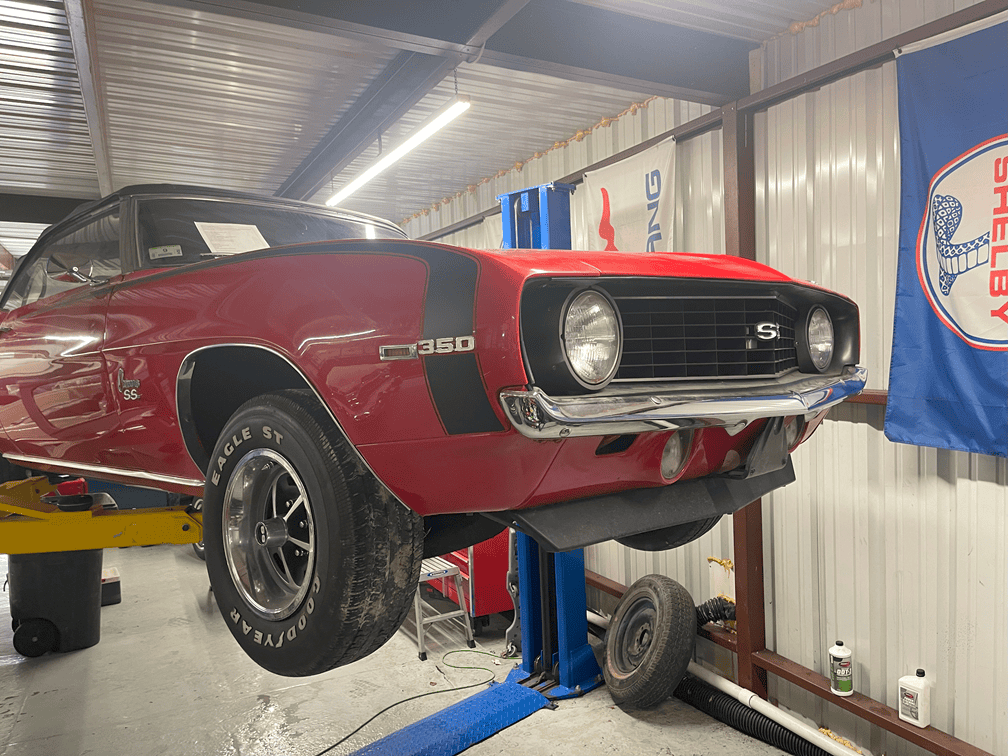
The 1969 Camaro sits at the top of that list. That wider body and muscular fender lines give builders a perfect canvas. It looks fast sitting still. Add an LS engine, coilover suspension, and wide modern rubber, and it looks like it belongs on a track.
The ’67 carries its own appeal: the clean, simple lines of the very first Camaro make it a popular choice for owners who want a slightly understated look. And the ’68, while visually similar to the ’67, gets the potential benefit of Astro Ventilation (no vent windows) and a few small structural differences that make modern upgrades slightly easier to fit.
Second-Gen Sleepers: The Overlooked Opportunity
Second-generation Camaros (1970–1981) are one of the best-kept secrets in the restomod world.
The 1970–1973 split-bumper cars have a profile that many enthusiasts think rivals the first gen for style. They’re wider, lower, and sit with a stance that screams performance. The best part is that they typically require a smaller initial investment than a ’69, which means more of your budget goes into the build itself.
The later 1974–1981 “rubber bumper” Camaros are practically untapped territory. They’re more accessible, accept all the same modern drivetrain swaps as earlier cars, and offer a look that stands apart from the typical restomod crowd. If you’re building for driving enjoyment rather than auction value, these second-gen cars deliver serious bang for the dollar.
The LS Swap: Why It’s the Heart of Most Camaro Restomods
If there’s one upgrade that defines the modern Camaro restomod, it’s the LS engine swap. And for good reason.
The GM LS-series V8 drops into a first-gen or second-gen Camaro like it was designed for it. The block is compact, the aftermarket support is huge, and the power makes the original engines look like they’re loafing. You can build a reliable 430-horsepower LS3 that starts every morning, sips fuel on the highway, and runs cool in August traffic: something no original 396 big block could ever claim.
Choosing the Right LS for Your Build
LS3 (6.2L): The sweet spot. There’s a reason this is the most popular choice in Camaro restomods. Stock LS3 engines produce 430–436 horsepower from the factory (depending on exhaust configuration), making them the go-to choice for serious restomod builds. A GM Connect & Cruise crate package pairs the engine with a matched transmission right out of the box. It’s reliable, parts are everywhere, and it makes more than enough power for street driving and weekend track days.
LS7 (7.0L): For the driver who wants naturally aspirated muscle. At 505 horsepower from the factory, the LS7 is a screamer. It rewards high-RPM driving and sounds absolutely wicked through headers. Best suited for track-focused restomods where every horsepower counts.
Supercharged options: When 500 horsepower isn’t enough. Adding a Whipple or Magnuson supercharger to an LS3 pushes output to 650+ horsepower. The LSA (the factory-supercharged 6.2L from the Chevrolet Camaro ZL1) is another popular path, delivering 556 horsepower straight out of the donor car.
The newer LT-series engines (LT1, LT4) from the C7 and C8 Corvette are showing up in restomod builds. They run cleaner and make great power, but the aftermarket isn’t as deep yet, and the wiring is trickier. These will likely gain ground in the next few years, but the LS still owns this space right now.
Suspension Upgrades
An LS swap gets the headlines, but the suspension is what actually makes a restomod Camaro fun to drive. The stock setup was designed in the mid-1960s. It worked for the era, but it can’t touch what modern parts deliver in cornering, braking, and ride quality.
There are three tiers of suspension work, and each one fits a different goal and level of commitment.
Bolt-On Upgrades: The Smart Starting Point
Detroit Speed’s Speed Kit 1 is the entry point. You get tubular upper and lower control arms, Koni Classic shocks, drop springs, sway bar, and corrected geometry. It bolts onto the factory subframe with basic hand tools. It’s a popular choice for owners who want a real handling upgrade without tearing the whole car apart.
Brands like QA1 and Hotchkis offer similar bolt-on kits at competitive quality levels. The key is matching the spring rates to your engine weight and driving style (something a lot of DIY builders get wrong).
Subframe Swaps: Where Handling Gets Serious
Companies like Detroit Speed (with their Hydroform subframe), Heidts, and Art Morrison make complete front subframes that bolt in where the original sat. This is where handling goes from “better” to “modern sports car.”
Art Morrison stands out here. They’re the only manufacturer offering a true Multilink independent rear suspension for classic Camaros. Their bolt-in IRS is a proprietary design that delivers modern ride quality and superior grip at the top of the range.
Full Chassis: The Pro-Touring Foundation
For pro-touring builds, Roadster Shop’s SPEC chassis for 1967–69 Camaros is the top tier. These are 3D-scanned, laser-cut, and built to support 345-series rear tires and serious power. Your body drops onto a brand-new chassis, and everything from steering to ride height and geometry is dialed in from day one.
At this level, you’re building a modern performance machine wearing a vintage suit.
Brakes, Interior, and Details That Matter
Stopping Power
Here’s the thing about putting 500+ horsepower in a car that originally had drum brakes: you need to be able to stop it. Wilwood dominates the Camaro restomod brake market with their Superlite 6R front kits featuring 13–14″ rotors. Pair those with a Superlite 4R rear setup, and you’ve got stopping power that matches your straight-line speed.
Baer makes solid kits as well. The real key is the master cylinder and pedal ratio: get those wrong and even quality brakes feel spongy. This is one area where professional installation saves headaches down the road.
Modern Comfort Inside
Nobody talks about interiors in restomod articles, but it’s often the upgrade owners appreciate most on actual driving days.
Vintage Air climate systems bring real A/C and heat to classic Camaros. In Texas, this is what makes the car usable from May through October.
Dakota Digital gauges replace the original cluster with a period-correct look but modern accuracy. GPS speedometers, accurate fuel level readings, and programmable warning lights keep you informed without breaking the vintage aesthetic.
Sound systems with Bluetooth connectivity can be installed behind the stock dash using compact head units from RetroSound or Custom Autosound, keeping the classic look while adding modern function.
Transmission Choices
Manual: The Tremec T56 Magnum 6-speed is the gold standard. It handles 700 lb-ft of torque, shifts cleanly, and fits with swap kits from Bowler or Modern Driveline. For drivers who want full engagement with their restomod Camaro, this is a great transmission to have.
Automatic: The 6L80E is the most popular automatic swap, though it requires tunnel modifications in most first-gen cars. It’s a strong, proven platform for builds where comfort and cruising take priority.
Mistakes We See in Restomod Camaro Builds
After four decades of working on classic Camaros, here are the mistakes that cost owners the most time and frustration:
Skipping the wiring. Too many builds run a modern LS engine through butchered factory wiring. A standalone wiring harness from PSI Conversions or Holley makes the engine run right. Splicing a modern fuel-injected engine into 1960s wiring creates gremlins that take years to chase down.
Cutting corners on paint. The paint is the first thing everyone sees. Skimping on bodywork, block sanding, and proper basecoat/clearcoat application shows immediately, no matter how good the drivetrain is underneath. This is not the place to save your budget.
Ignoring the fuel system. An LS engine needs consistent fuel pressure from a return-style fuel system. The original Camaro gas tank, fuel lines, and sender won’t cut it. A complete fuel system upgrade with an in-tank pump, new stainless lines, and proper filtration prevents the fuel delivery problems that plague poorly planned builds.
Mismatched suspension tuning. Bolting on quality parts with stock spring rates can make a car handle worse than it did before. Every setup needs to be tuned for the weight of your engine, transmission, and tire combo. This is where professional setup time pays for itself.
Not planning the build sequence. Restomods touch every system in the car. Start with the chassis and drivetrain, then move to the body, then the interior, then electrical. Building out of order means pulling finished work apart to access things underneath. That wastes time and creates unnecessary setbacks.
Building for resale instead of enjoyment. Here’s the honest truth: restomod build investments rarely match resale value dollar for dollar. Build your restomod Camaro because you want to drive it and love it. If protecting investment value is the priority, talk to us about a numbers-matching restoration instead.
Interested in Upgrading Your Classic Camaro? Give Us a Call.
A Chevrolet Camaro restomod is one of the most rewarding builds in the classic car world. The aftermarket is deep, the platform is proven, and the result is a car that honors the original while delivering power the factory engineers only dreamed about.
The key is making smart calls early. Pick the right generation for your budget and goals. Choose an engine that fits how you’ll actually drive. Put your money into suspension and brakes before paint and chrome. And work with a shop that’s lived and breathed these cars for decades.
At Wilson Auto Repair, we’ve been building and restoring Camaros here in Dallas–Fort Worth for over 40 years. We’ll walk you through every option and help you build a restomod that’s worth driving for the next generation.
If you’re ready to start planning your Camaro restomod, call Wilson Auto Repair at (972) 271-3579 or stop by our shop. We’ll talk through your car, your goals, and what it’ll take to make it happen. You’ll get honest advice from people who love these cars as much as you do.