

That ’67 Mustang gathering dust under a tarp in your garage is waiting on you. Maybe it’s Dad’s fastback that taught you what freedom felt like at sixteen. Or that barn find that whispered “rescue me” even though the engine’s seized and mice claimed the interior. Or it could be Grandpa’s Sunday driver, now yours but overwhelmingly in need of help.
Here’s what we’ve learned after 44 years and thousands of restorations: Your classic Mustang doesn’t have to choose between museum piece and daily driver.
Pure restoration sounds noble until you’re pumping those drum brakes in traffic, wrestling that wandering steering wheel on the highway, or begging the carburetor to cooperate on a cold morning.
Restomods solve this dilemma, keeping everything you love about the car while adding the reliability to actually drive it to that car show three states away.
If you think restomods for classic cars are still controversial, that ship has sailed. Investment collectors watch restomod values match (sometimes beat) original restorations.
Families with an inherited vintage Mustang want a car their kids will actually ride in, not just Instagram. And if you’re discovering classic Mustangs for the first time, you’ll quickly learn that modern engineering only amplifies the authentic driving experience Ford originally promised.
Let’s take a look at which Mustang years make the best restomods, what modifications deliver real impact, and why the money increasingly makes sense for thoughtful modernization over trailer-queen preservation. Whether you’re holding Dad’s keys or finally chasing your own dream, here’s the real story about transforming your classic Ford Mustang.
The Sweet Spot Years (And the Hidden Gems)
Ask any builder and they’ll tell you: 1967-1968 fastbacks are restomod royalty. They nailed the formula: the long hoods and short rear decks that look good from every angle, that dual-scoop hood that became the poster on every kid’s wall, and just enough interior room to fit modern goodies without playing Tetris.
Quality ’67-’68 fastbacks and ’65-’66 Mustangs are some of the most popular years for owners to restomod, and they look fantastic.
Those clean, simple lines in the ’65-’66 models make modern wheels pop. The 200-300 pound weight advantage makes that Coyote swap feel absolutely violent. We’ve built jaw-dropping ’65 coupes that cost less all-in than just buying a decent ’68 fastback.

The 1969-1970 models deserve serious consideration for aggressive Pro-Touring builds. Their larger, more muscular stance naturally accommodates wide modern rubber (think 275-series rear tires without tubs). The expanded engine bay swallows modern drivetrains with less fabrication.
A ’69 Mach 1 SportsRoof provides the perfect canvas for track-capable handling while maintaining street manners. These years trade some nimbleness for presence: ideal if your vision includes 18-inch wheels and contemporary performance.
Don’t overlook the 1971-1973 “big body” Mustangs: the market certainly has, which creates opportunities. Clean examples cost $8,000-$15,000, half the price of earlier years. Yes, they’re heavier and larger, but that extra size means easier modern powertrain swaps, more comfortable interiors, and surprisingly good aerodynamics once lowered properly.
We’ve transformed numerous ’71-’73 Mustangs that prove these overlooked years can create stunning restomods at lower entry costs.
Engine Swaps That Transform Performance and Reliability
The heart of any restomod beats under the hood, and Ford’s Coyote 5.0L V8 has revolutionized Mustang engine swaps. The 435-460hp (depending on generation) certainly transforms acceleration, but it’s the OEM-level integration, factory parts availability, and 200,000-mile reliability that really makes a difference.
The Coyote delivers modern fuel injection precision, meaning your classic starts instantly regardless of temperature, altitude, or how long it’s been sitting.
Installing a Coyote requires serious fabrication expertise:
- Shock towers need modification.
- Oil pans must clear crossmembers.
- Cooling systems require complete redesign.
The Control Pack ECU alone costs $2,000, before considering the engine ($8,000-$10,000), transmission ($3,500-$5,000), and installation labor ($8,000-$12,000).
Total Coyote swap investment typically reaches $25,000-$35,000, but the transformation is absolute.
Traditional Ford stroker motors (347ci, 393ci, 408ci) offer compelling alternatives at lower costs. A properly built 347 stroker delivers 400-450hp with carburetor simplicity or EFI reliability, maintains period-correct appearance, and costs $8,000-$15,000 installed.
These engines provide massive torque improvements over stock while preserving the vintage style pushrod V8 character. For clients wanting authenticity with improvement rather than complete modernization, strokers hit the sweet spot.
The LS swap debate rages in Mustang circles, but here’s our position after thousands of builds: Keep it Ford. While LS engines offer excellent power and affordability, installing Chevrolet power in a Mustang affects resale value, enthusiast acceptance, and your own satisfaction.
The Ford faithful notice, and it matters at shows, cruise-ins, and eventually at sale time. Coyotes cost more but preserve bloodline integrity.
Suspension: Where Your Classic Mustang Becomes a Real Car Again
Remember white-knuckling the steering wheel while your Mustang wandered across the lane? Or that sinking feeling when you hit the brakes and… kept moving? Modern coilover suspension with tubular control arms fixes everything wrong with your classic’s handling.
We’re talking night-and-day transformation: suddenly your Mustang tracks straight, actually goes where you point it, and stops when you need it to.
Here’s the thing about suspension parts: cheap stuff isn’t just disappointing, it’s dangerous. Entry-level kits ($1,500-$2,500) beat stock, sure, but they’re basically one-size-fits-nobody. Step up to quality systems from QA1, RideTech, or Detroit Speed ($3,500-$8,000) and you get components actually engineered for your Mustang’s weight and balance.
The difference means your classic will handle better than most modern cars. We exclusively install proven systems because suspension failures aren’t just expensive, they’re dangerous.
Four-wheel disc brakes should be your first modification, not an eventual upgrade. Modern 13-inch front rotors with 4-piston calipers and proportioned rear discs provide stopping power that drum brakes can’t approach.
Quality brake kits run $2,500-$4,000 installed, and every dollar spent here could save your life. We’ve seen too many near-misses with original brakes to consider them remotely adequate for modern traffic.
Rear suspension deserves equal attention. Leaf springs worked in 1965, but they create wheel hop, axle wrap, and harsh ride quality. Modern 3-link or 4-link rear suspensions with coilovers and watts linkage transform handling while improving comfort.
Combined with subframe connectors to stiffen the unibody, your Mustang becomes a genuine performance car rather than a flexible flyer.
Custom Interior Comfort: Actually Enjoying the Drive
Texas summer, black vinyl seats, and no A/C is torture, not nostalgia. Vintage Air changed everything with systems that deliver ice-cold air while looking period-correct. Their Gen IV setups ($2,000-$3,500 installed) hide completely under your dash and actually work. We’re talking defrost that clears windows and A/C that makes August drives pleasant.
Your classic deserves a sound system that doesn’t sound classic. RetroSound units look like your original radio but hide Bluetooth, navigation, and actual sound quality inside. Add properly placed speakers and suddenly your favorite playlist makes that Sunday cruise even better.
It’s these touches that transform your Mustang from “car I sometimes drive” to “car I drive every chance I get.”
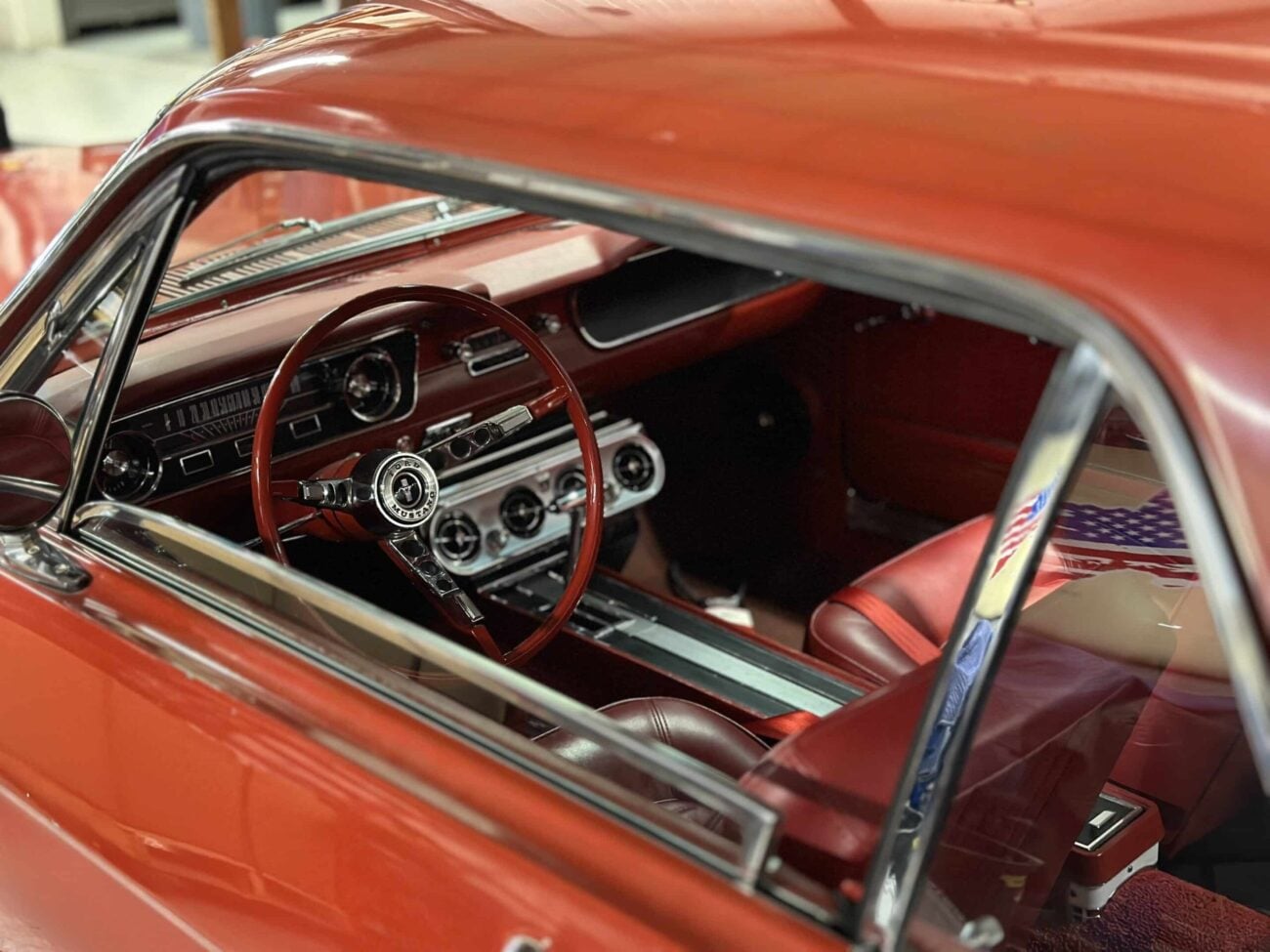
Seating represents the most personal interior choice. Original bench seats lack any lateral support, making spirited driving uncomfortable and tiring. Modern buckets from TMI, Procar, or Corbeau provide proper bolstering while maintaining classic aesthetics.
Combined with modern foam technology and proper lumbar support, four-hour drives become pleasurable rather than painful. Budget $1,500-$3,000 for quality seat upgrades including recovering.
Small details separate professional restomods from amateur efforts:
- LED gauge backlighting that’s actually readable at night
- USB charging ports hidden in the ashtray
- Modern sound deadening that eliminates road noise
- Power windows with safety auto-reverse
- Properly functioning heating/defrosting
These modern conveniences make the difference between a car you can drive and one you want to drive.
Let’s Talk Money (The Real Numbers)
To shoot it straight, entry-level professional restomod work starts around $35,000-$50,000. That gets you essential mechanical updates, safer suspension, real brakes, and basic reliability. This assumes your Mustang isn’t a rust bucket needing major metal work.
Step up to the $75,000-$125,000 range and you’re in Coyote swap territory with complete suspension transformation, modern interior comfort, and paint that makes people stop mid-sentence. These builds create daily drivers that embarrass new Mustangs at stoplights and cruise confidently to shows anywhere.
Then there’s the high-rollers. Turnkey builds and top-notch engineering can run $150,000-$400,000+. Beautiful work, but not necessary for most of us who just want to drive and enjoy our classics.
The resale reality is that Restomods traditionally haven’t returned full investment value. However, the market has shifted significantly. Quality restomods increasingly match or exceed mediocre original restorations in value, especially for common models without numbers-matching significance.
A well-documented restomod with proven reliability often sells faster and for more money than a temperamental original restoration.
Why Experience Matters (And Why YouTube University Isn’t Enough)
After completing thousands of restorations, we’ve learned something important: restomods are real engineering puzzles. You’re making systems from the 1960s play nice with 2020s technology. That Coyote engine makes heat levels that’ll cook your original cooling system. Modern transmissions need tunnels modified just right or you’ll have vibrations forever.
Here’s what experience brings to the table: knowing which oil pan clears the crossmember, understanding which alternator won’t fry your wiring, and recognizing when “close enough” becomes an “expensive mistake.” We’ve solved these puzzles thousands of times. You shouldn’t have to learn these lessons on your dream car.
Documentation separates professional builds from well-intentioned amateur efforts. Every modification should be photographed, every component documented, every specification recorded.
This paper trail transforms your Mustang from “modified” to “professionally restored” in market perception. Insurance companies require it, future buyers expect it, and you’ll appreciate it when troubleshooting issues years later.
We regularly repair or complete projects from failed DIY attempts or inferior shop work. These rescue projects often cost more than starting fresh because we’re correcting mistakes while completing the build. Choose your shop based on experience, portfolio, and references (not just price).
Making the Right Choice for YOUR Mustang
First question: Is your Mustang actually special (Shelby, Boss, a rare factory option)? Then preserve it. But if it’s one of hundreds of thousands of regular Mustangs built that year, make it drive like you’ve always wanted.
Get clear on how you’ll actually use it. Weekend cruises need different setups than daily driving. Be honest about your skills and workspace too: professional builds finish in 6-12 months while DIY projects often drag on for years.
Budget smart: take your number and add 30%. Every project hides surprises. Start with the cleanest car you can afford, because that “bargain” rust bucket becomes a money pit fast. And find a shop that gets both worlds: classic restoration knowledge AND modern performance. You need both.
Time to Stop Dreaming and Start Driving
If you fear that restomods abandon the past, we believe they actually help you experience it. Your Mustang was built to be driven, not admired from across the garage. Modern reliability means you can chase sunset drives without watching the temperature gauge. Your kids will actually want to go for rides. You can show up at the car show without calling for a trailer.
Whether you’re preserving Dad’s legacy, building something special to pass down, or finally grabbing that dream you’ve had since high school, restomods make sense. They keep the soul of the Mustang while ditching the headaches that keep classics parked.
We’ve learned over four decades of restoration work that the best classic is the one creating new memories, not just preserving old ones. Your Mustang’s next chapter doesn’t have to be about choosing between yesterday and tomorrow.
Ready to transform your Mustang from garage art to daily driver? Let’s talk about your vision and build a plan that fits your budget and dreams.
Call (972) 271-3579 or swing by our Dallas shop. Your Mustang’s been waiting long enough.