
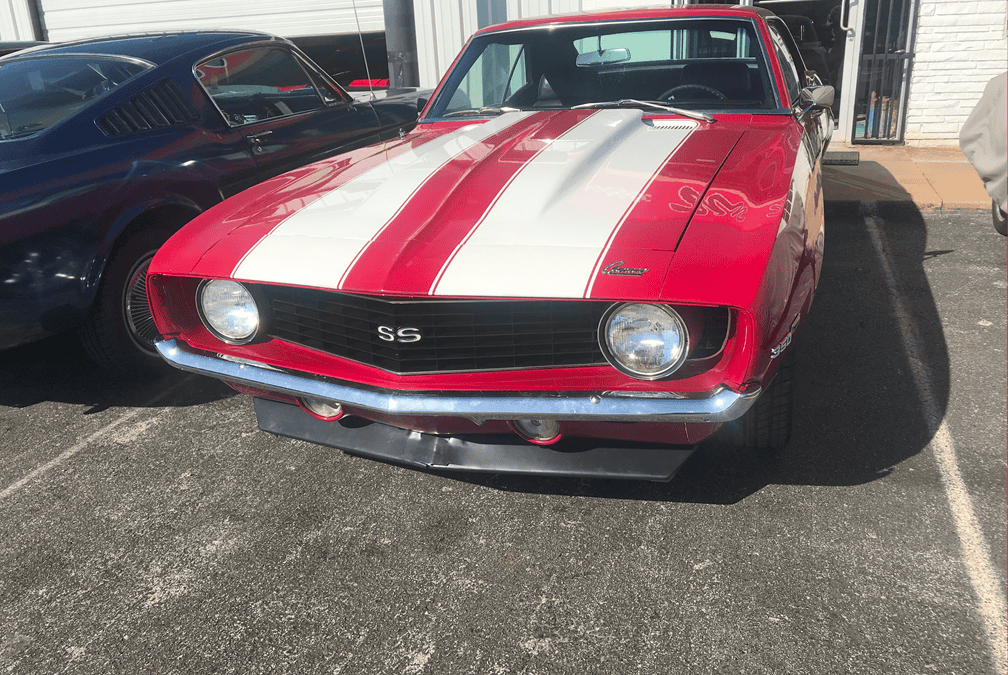
Has a classic Camaro been calling to you from a listing photo? Its aggressive stance, deep-set headlights, and the promise of a small block rumbling to life? If you’re looking to potentially buy one of these American classics,
Buying a Camaro can be thrilling, but it can go sideways fast if you don’t know what you’re looking at. Clones outnumber authentic cars in some model years. Rust hides in places you’d never think to check. And that “numbers-matching SS” in the listing might be a base-model V8 with fresh badges bolted on last weekend.
We’ve spent over 40 years working on classic Chevrolets at Wilson Auto Repair, including more classic Camaros than we can count. We’ve seen every trick in the book and every honest mistake a first-time buyer can make. This guide covers what we wish every Camaro shopper knew before writing a check.
Whether you’re chasing a 1969 Chevrolet Camaro Z/28 or a budget-friendly second-gen cruiser, here’s what you need to know.

Know Your Generations: Which Classic Camaro Is Right for You?
Before you start browsing listings for a classic Camaro, it helps to understand what you’re shopping for. The Chevrolet Camaro debuted in 1966 as a 1967 model as Chevy’s answer to the wildly popular Ford Mustang. It shared GM’s new F-body platform with its sibling, the Pontiac Firebird, and both cars would evolve together through multiple generations.
First Generation (1967–1969)
These are the blue-chip classic Camaros. The first-gen cars are the most collectible, the most counterfeited, and the most emotionally charged. Each year has a distinct personality:
1967 launched the nameplate with vent windows, an enormous options list (nearly 80 factory and 40 dealer-installed options), and three performance packages: RS, SS, and Z/28. Just over 220,000 sold that first year. A 396-powered RS/SS convertible served as the Indianapolis 500 pace car, and 100 Ermine White replicas were built for Speedway use. The ’67 Z/28 is especially rare because only around 600 were built, and Chevrolet didn’t even mention the package in sales literature.
1968 brought subtle but meaningful changes to the Chevrolet Camaro. Astro Ventilation replaced the vent windows. Side marker lights appeared on the fenders. Staggered rear shocks cured the ’67’s wheel hop problem. The Z/28 finally appeared in Chevrolet brochures, and nearly 7,200 were sold. Buyers should know that the 1968 Camaro cowl tag carries minimal build information, making it the easiest model year to fake.
1969 is the crown jewel. All-new sheet metal (except the hood, trunk lid, and roof) gave the car a wider, lower, more aggressive look. Twelve different engines were available, the most of any first-gen year. Of all classic Camaros, the 1969 models generate the most buyer interest…and the most counterfeits. Total 1969 production reached 243,000 units across all trims.
Second Generation (1970–1981)
The second-gen Camaro arrived with a dramatic European-influenced fastback design that still turns heads today. The early cars (1970–1973) with their distinctive “split bumper” front ends are the most sought-after in this generation.
The 1970 models, sometimes called “1970½” because they launched late due to production delays, offered the LT-1 350 V8 producing 360 horsepower in Z28 trim. The rare L78 396 (actually displaced 402 cubic inches) at 375 horsepower saw roughly 600 units produced, making it the rarest second-gen production Camaro.
As the 1970s progressed, emissions regulations and the fuel crisis choked performance. Horsepower numbers dropped significantly through the mid-to-late decade. But late ’70s Z28s are gaining collector traction today, fueled by Gen X nostalgia. The 1979 model year hit peak production at roughly 282,000 units, and those cars now represent some of the most affordable entry points into classic Camaro ownership.
Decoding the Packages: RS, SS, and Z/28
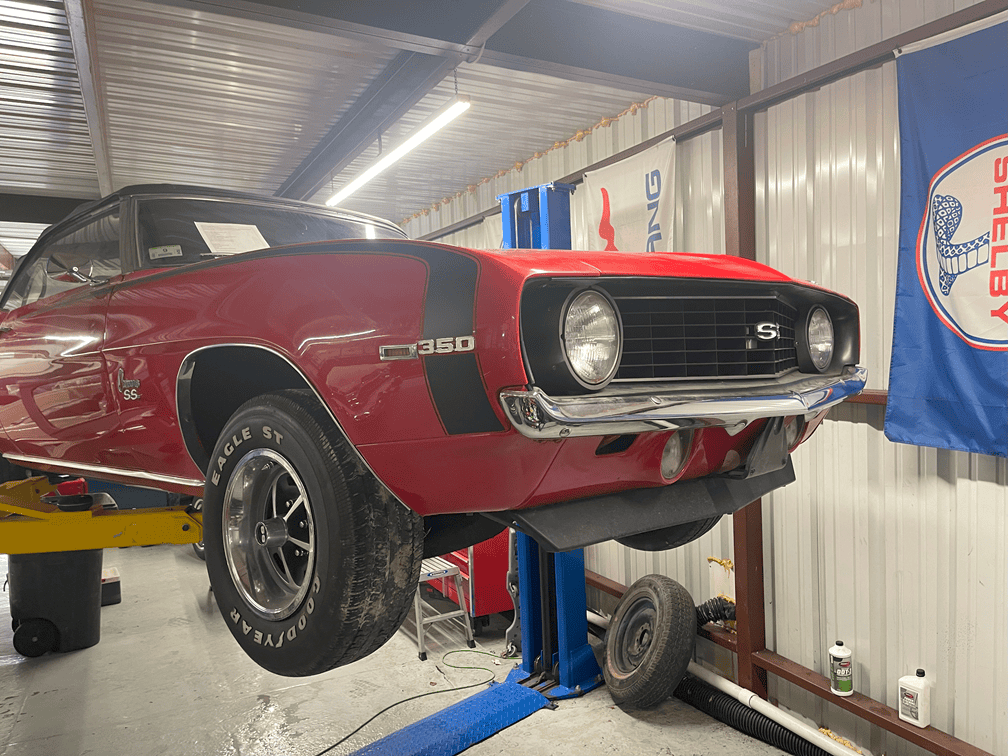
These three packages served different purposes, and understanding the differences is critical when evaluating any classic Camaro for sale. Confusion costs buyers real money.
RS (Rally Sport, RPO Z22) was an appearance package only. They have hidden headlights, upgraded trim, RS badging, but no mandatory performance upgrades. An RS could be ordered on anything from a base six-cylinder Camaro to a Z/28. It looked fast. It didn’t necessarily drive fast.
SS (Super Sport, RPO Z27) was the performance-and-appearance package. It required a V8 (either the 350 cubic-inch small block or the 396 big block), plus upgraded suspension, hood with non-functional air inlets, and SS badging. The SS was the street performer.
Z/28 (RPO Z28) was the racing homologation package, purpose-built to let the Camaro compete in SCCA Trans-Am racing. It came exclusively with a high-revving 302 cubic-inch small block (a 283 crank in a 327 block), mandatory 4-speed manual transmission, power front disc brakes, and a 12-bolt rear axle. No air conditioning. No automatic. Coupe only.
Here’s the key:
- RS and SS could be combined (the coveted RS/SS).
- RS and Z/28 could be combined (RS/Z28).
- But SS and Z/28 were mutually exclusive; you couldn’t get both on the same car. If someone shows you an “SS/Z28,” walk away.
How to Spot a Classic Camaro Clone
Clone fraud is the biggest risk in the classic Camaro market, and it catches both experienced buyers and beginners.
Clones are common because no first-generation Camaro VIN identifies it as an SS, Z/28, or COPO car. The VIN only tells you the division, body style, whether it had a six-cylinder or V8, model year, assembly plant, and sequence number. A base-model V8 Camaro and a Z/28 have VINs that look almost identical.
So how do you verify what you’re actually buying? It takes layers of evidence.
The VIN
The 13-digit first-gen VIN is your starting point, but it only confirms basics. The fifth digit tells you the engine type (six-cylinder or V8), but not which specific engine. It rules out obvious lies (a “Z/28” with a six-cylinder VIN code, for example) but can’t prove a car is what the seller claims.
The Cowl Tag
This metal tag on the driver’s side of the firewall is far more informative. On Norwood, Ohio-built 1969 Camaros (produced after mid-December 1968), the cowl tag includes X-codes that identify specific packages: X33 or X77 for Z/28, and X44, X55, X66, or X88 for SS models. But be aware: Van Nuys, California-built 1969 cars had no X-codes on their cowl tags. And 1968 cowl tags carry minimal build data. Cowl tags can also be swapped or reproduced.
The Protect-O-Plate
This stamped aluminum plate from the original warranty booklet contains engine assembly codes, transmission codes, and RPO option codes. It’s one of the strongest pieces of documentation when it’s genuine. Unfortunately, reproduction Protect-O-Plates have become their own cottage industry. Work with an expert to compare the stamping quality and font spacing against known originals.
Build Sheets
This is the holy grail of documentation. These factory documents list every option installed on the car. They were sometimes stuffed behind seats, under carpet, inside headliners, or behind door panels during assembly. A legitimate build sheet matching the car’s VIN and documented options is the strongest authentication evidence you can find.
Mandatory Equipment Checks
Certain packages required specific equipment that couldn’t be deleted. A real Z/28 always had power front disc brakes, a 4-speed manual transmission, a 12-bolt rear axle, and 15-inch Rally wheels. It was never offered with air conditioning, never with an automatic transmission, and never as a convertible. If any of these rules are broken, you’re looking at a clone, no matter what the badges say.
The rule of thumb is that if the documentation doesn’t exist, assume it’s a clone and price it accordingly. A well-built clone can still be a great car. It just shouldn’t cost authentic-car money.
Where Rust Hides on Classic Camaros
Rust is the single biggest mechanical threat to any classic Camaro and the most expensive problem to repair properly. The first-gen’s semi-unibody construction (a bolt-on front subframe mated to a unibody rear section) creates natural stress points where moisture collects, and corrosion takes hold.
Here’s where to look, ranked from most critical (and most expensive) to least:
- Rear frame rails above and ahead of the rear axle. This is the single most costly repair on a first-gen Camaro. If these are gone, the car needs serious structural work.
- Subframe-to-body mounting points where the bolt-on front subframe meets the unibody. Corrosion here compromises the entire front-end structure.
- Floor pans especially the driver’s side, where moisture from wet shoes accelerates rust. Check under the carpet, not just on top of it.
- Trunk pan water leaks around the rear window seal and taillights pool here for years.
- Rocker panels and lower quarter panels these are the first things you’ll see rusting from the outside, but by the time rust is visible here, it’s usually worse behind the panels.
- Cowl area and windshield base water drains through channels in this area. When those channels clog with leaves and debris, standing water eats through the metal.
- Rear window corners on hardtop models, moisture collects where the rear glass meets the body.
- Door bottoms drain holes in the doors clog over time, trapping water inside.
On second-gen cars, pay special attention to the rear frame rails. They’re structural and built into the body, so if they’re severely corroded, most experts will tell you to walk away.
Pro tip: A car from the southern or western United States has a real advantage. A rust-free Texas or Arizona car is worth a legitimate premium over a Midwest or Northeast car, even if the Midwest car looks cleaner in photos.
To make sure you aren’t scammed, watch for fresh undercoating. It’s one of the oldest tricks in the book. A thick coat of undercoating is sprayed over rusted metal to hide problems long enough to close the sale. Run a magnet along body panels, too. If the magnetic pull feels weak or inconsistent, you’re likely feeling body filler (Bondo) over rust repair.
Engine Options: What’s Under the Hood
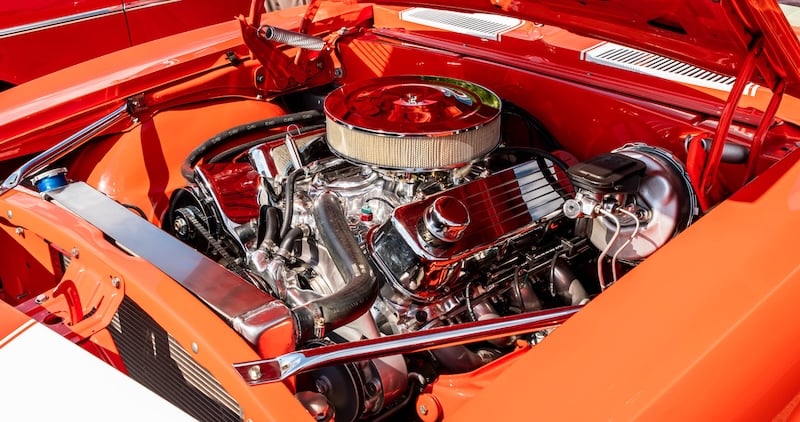
The Chevy Camaro offered a staggering range of powertrains across its first two generations. Understanding what you’re looking at and what it should look like is critical when evaluating any classic Camaro for sale.
First-Gen Power Hierarchy
The base engine was a 230 cubic-inch straight-six producing 140 horsepower. It’s practical and affordable, but not what most collectors are chasing.
The small block V8 family is what most buyers end up with. Options ranged from the 327 (210–275 hp depending on tune) to the legendary 350 (200–300 hp). The DZ 302, exclusive to the Z/28, was the high-revving Trans-Am racing engine. It has solid lifters, a Holley 780cfm carburetor, and the ability to scream past 7,000 RPM. It was rated at 290 horsepower, but that number was intentionally low-balled to keep insurance premiums down and satisfy racing classification rules. Real output was closer to 350–400 horsepower.
The big block 396 family powered the SS models. The L35 made 325 horsepower, the L34 made 350 horsepower, and the fire-breathing L78 made 375 horsepower with solid lifters, forged internals, and a Holley 800cfm carburetor. The L89 option added aluminum cylinder heads to the L78 package, making them extremely rare and highly valuable.
At the very top of the line are the COPO 427s. The COPO 9561 used a cast-iron L72 big block rated at 425 horsepower. About 1,000 were built. The COPO 9560 ZL1 used an all-aluminum 427 rated (conservatively) at 430 horsepower. Only 69 ZL1 Camaros were ever produced, and each engine alone cost more than a complete base V8 Camaro.
Verifying What You’ve Got
Engine codes are stamped on a pad on the front passenger side of the block. Each suffix code corresponds to a specific application (DZ for the Z/28’s 302, for example). Keep in mind that engine pads can be restamped. You can cross-reference the casting number (on the block itself) with the engine pad code and the car’s documentation. If the numbers tell a consistent story, you’re in good shape. If anything doesn’t match, it’s time to ask hard questions.
Your Pre-Purchase Checklist
Before you hand over a check, make sure you’ve covered these basics:
Check Documentation First. Ask for the title history, any Protect-O-Plate or build sheet, restoration receipts, and photos of the car before any work was done. The longer the paper trail, the better.
Independent Inspection. Never skip this. Hire a professional who specializes in classic Chevrolets, not just a general mechanic, to go over the car in person. They’ll catch things photos can’t show.
Verify the Story. If the seller says “numbers-matching,” ask them to prove it. Match the VIN to the cowl tag, to the engine pad, to the Protect-O-Plate. Every piece should tell the same story.
Check the Title. Make sure it’s clean, in the seller’s name, and matches the VIN on the car. Rebuilt or salvage titles significantly impact value and insurability.
Get an agreed-value insurance quote. Before you buy, call a specialty insurer like Hagerty or Grundy and get an agreed-value policy quote. This tells you what the market thinks the car is worth and protects your investment if something goes wrong. Standard auto insurance policies don’t cover classic cars at their true value.
Know your budget beyond the purchase price. The sticker price is just the beginning. Budget for transport, insurance, storage, and any immediate maintenance needs. A car that’s been sitting needs fluids flushed, rubber components inspected, and a careful first startup. Never plan on a turn-the-key-and-go approach.
Ready to Talk About Your Classic Camaro?
Whether you’ve already found a classic Camaro for sale or you’re still searching for the right one, the team at Wilson Auto Repair is here to help. With over 40 years of hands-on experience and tens of thousands of classic car projects under our belt, we can help you evaluate a potential purchase, plan a restoration, or get your new acquisition road-ready.
We’ve worked on classic Camaros from every generation, so we know these cars inside and out. we’re happy to share what we’ve learned.
Give us a call at (972) 271-3579 or schedule your free consultation today.