
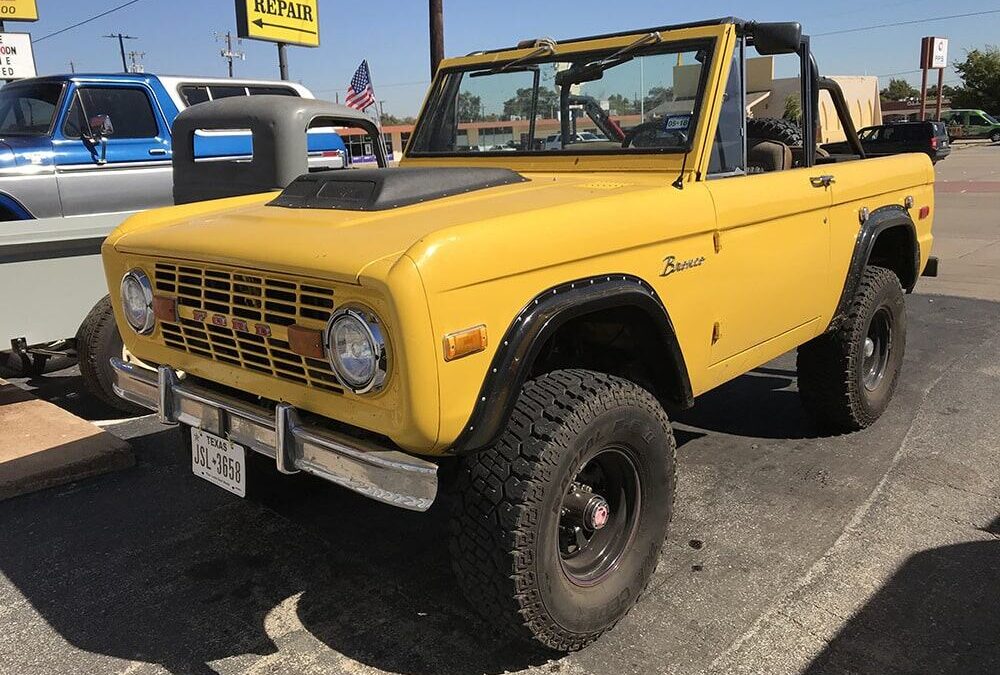
A classic Ford Bronco restoration is rarely a casual decision. Whether the truck has been in your family for decades or you’ve just found one tucked away in a garage or desert lot, the question is usually the same: What am I really getting into?
Early Broncos are simple, rugged vehicles, but time, rust, and previous repairs can complicate even the best-looking projects. What starts as a straightforward plan can quickly turn into a much larger undertaking if you don’t know where to look or what to expect.
We’ve been restoring Early Broncos in Dallas since 1980. After four decades of hands-on work and thousands of classic vehicles through our shop, we’ve seen nearly every scenario. Clean trucks with hidden structural issues. Rough projects that turned out to be solid foundations. Owners who planned well and owners who wished they’d known more before they started.
This guide is designed to give you that clarity upfront. We’ll walk through the Bronco’s history, common rust and problem areas, realistic restoration timelines, cost ranges, and popular modern upgrades so you can make informed decisions before the first bolt comes off.
Here’s what a Ford Bronco restoration really looks like, from the ground up.
Understanding Your Early Bronco (1966-1977)

Ford introduced the Bronco on August 11, 1965, as a 1966 model. Built on a compact 92-inch wheelbase, it was designed as a recreational off-road vehicle to compete with the Jeep CJ-5 and International Scout. Every first-generation Bronco rolled off the assembly line at Ford’s Michigan Assembly Plant in Wayne, Michigan.
Three Body Styles Defined the Lineup
- Roadster (1966-1968): With no roof or doors, it’s the rarest variant. Only about 26 confirmed 1968 V8 roadsters exist, making them highly collectible.
- Half-Cab/Pickup (1966-1972): Short top with a pickup bed, seating for two to three passengers.
- Wagon (1966-1977): Full-length hardtop with seating for up to five. The most popular configuration throughout production and the most commonly restored today.
Engine Options by Year
Early Broncos came with either inline-six or V8 power:
- 1966-1968: 170 cubic-inch inline-6 (105 hp) or 289 V8 (200 hp)
- 1969-1972: 170 inline-6 or 302 V8 (replacing the 289)
- 1973-1977: 200 inline-6 or 302 V8
The 351 Windsor was never a factory option for Early Broncos, it only became available in later full-size models. Today, the 351W is one of the most popular engine swaps because it bolts directly into place with minimal modification.
Drivetrain Basics
All Early Broncos used a Dana 20 transfer case in part-time four-wheel drive configuration. You’ll find two versions:
- T-Shift (1966-1972): Push-button T-handle with 2.46:1 low range which is normally preferred by off-road enthusiasts
- J-Shift (1973-1977): Backward J-pattern with 2.34:1 low range
Front axles evolved during production. Early models (1966-1970) received the Dana 30 with kingpin steering knuckles. Starting in 1971, Ford upgraded to the stronger Dana 44 with ball joints. Factory front disc brakes only appeared on 1976-1977 models. All earlier Broncos came with four-wheel drums.
Rust: The Biggest Challenge in Any Ford Bronco Restoration
We’ve learned that when restoring a classic Ford Bronco, rust is almost always the determining factor in cost, timeline, and complexity. We’ve seen Broncos that looked decent from ten feet away turn into major metalwork projects once we started disassembly.
The good news is that rust patterns in Early Broncos are pretty predictable. Knowing where to look helps you assess any Bronco accurately.
Where Rust Hides
Water intrusion follows specific paths in these trucks. The original seam sealer in the drip rails deteriorates over time, allowing water to seep inside the roof, travel down the A-pillars and B-pillars, and pool where the floors meet the rocker panels. This causes rust that spreads from the inside out, which is often invisible until you’re deep into the restoration.
Critical inspection areas include:
- Floor pans: Front driver/passenger areas, corners behind the rear seat (the lowest point where water collects), and the battery tray, where acid accelerates corrosion
- Cab corners: Lower B-pillar corners, both inner and outer surfaces
- Rocker panels: The entire length, especially where the drain holes get plugged with debris
- Tailgate: Drain holes clog frequently, causing internal rust in the seams and lower edges
- Cowl area: The hood cowl, where water and debris collect, plus cowl vent drainage paths
- Windshield frame: A-pillar regions and rain gutter areas
Frame rust demands particular attention. Corrosion often hides inside the frame rail channels where moisture gets trapped. The section near the steering box mounting takes heavy stress and can crack if weakened by rust.
Why We Recommend Frame-Off Restoration for Classic Broncos
When owners ask about restoring a Ford Bronco, we always discuss the difference between frame-off and body-on approaches. While body-on restoration works for some vehicles, we typically recommend frame-off work for Broncos. Here’s why.
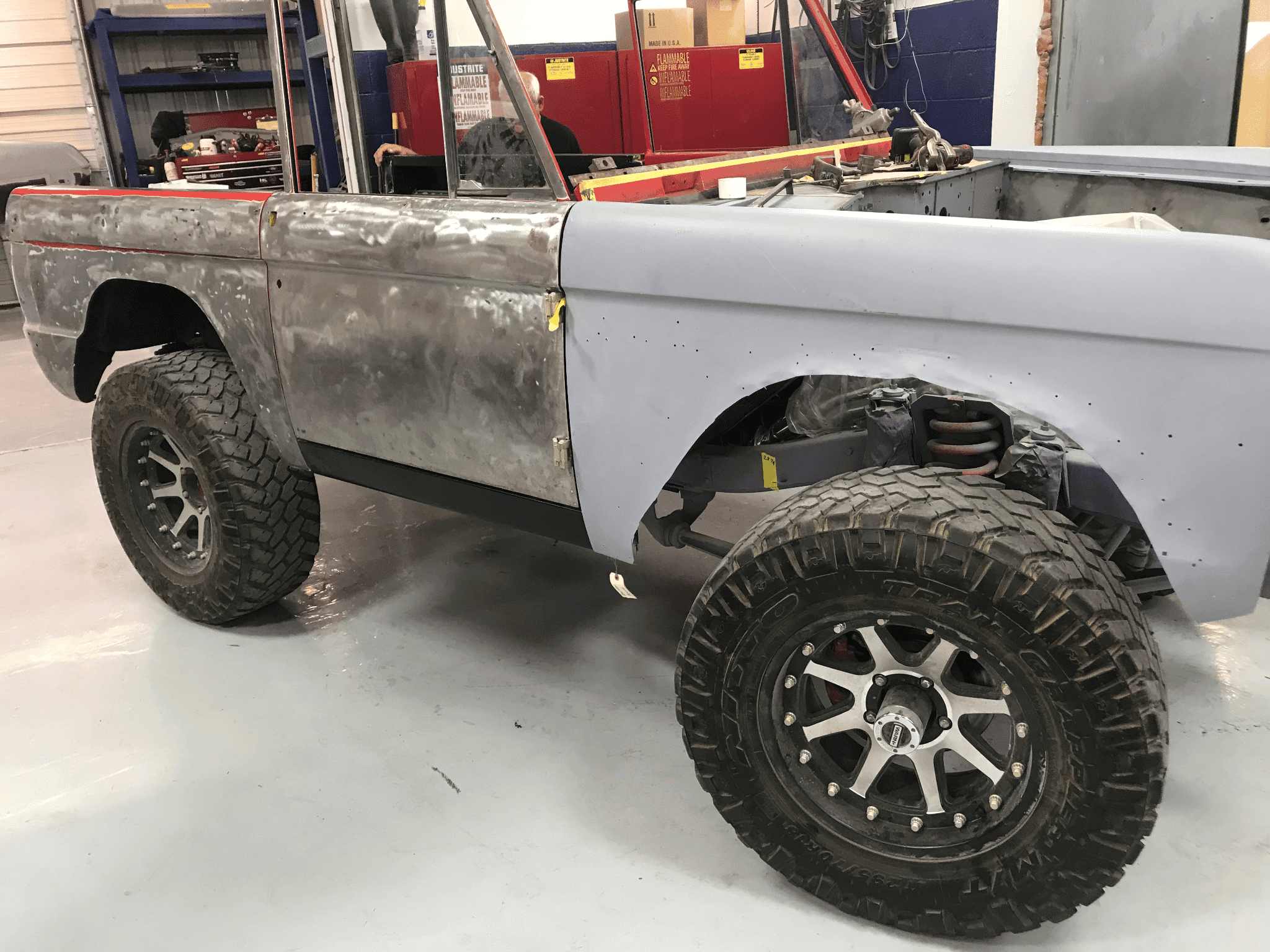
Frame-off restoration means complete disassembly, with the body removed from the chassis and every component rebuilt. The frame usually remains the only original part retained to preserve the VIN, though severely damaged frames can be replaced with reproduction units if needed.
The Advantages of Frame-Off Work
- Hidden problems revealed: Complete disassembly exposes rust, previous improper repairs, and structural issues that body-on work would miss entirely.
- Thorough frame treatment: You can properly address internal frame surfaces, weld in reinforcements, and apply protective coatings everywhere, not just what you can reach.
- Superior paint quality: Body and paint work without overspray concerns on the chassis produces show-quality results.
- Easier upgrades: Modern brake conversions, suspension improvements, and drivetrain upgrades install much more cleanly with the body removed.
We’ve seen many body-on restorations that looked great initially but developed problems within a few years because underlying issues were never addressed. Frame-off takes longer and costs more upfront, but it produces results that last in the long term.
The Ford Bronco Restoration Process: What to Expect
Every Bronco restoration follows a similar path, whether it’s a driver-quality build or a concours-level project. Here’s how the process typically unfolds.
Phase 1: Disassembly and Assessment
We start with a complete teardown, photographing and labeling every part. This documentation proves invaluable during reassembly, especially for wire routing, vacuum line placement, and small hardware. Once the body lifts off the frame, we can accurately assess what the Bronco needs.
This phase often brings surprises. The “minor floor rust” might extend into the frame rails. Previous repairs might have used incorrect techniques or materials. We provide detailed reports so owners understand the full scope before metalwork begins.
Phase 2: Metalwork and Paint
Media blasting strips everything to bare metal, revealing exactly what we’re working with. Rust repair and panel replacement follow, cutting out damaged metal and welding in new or reproduction panels. Quality Bronco metalwork requires patience; rushing creates problems that show up later.
After bodywork, the frame gets powder-coated for industrial-grade protection. The body receives high-build primers, multiple rounds of block sanding, and finally the paint itself. Show-quality finishes require wet sanding and buffing after the color coats cure.
Phase 3: Assembly and Testing
With painted components ready, we build the rolling chassis by installing axles, suspension, and brakes on the finished frame. Drivetrain goes in next, whether it’s a rebuilt original engine or a modern upgrade. Once the body is mounted back on the chassis, the wiring, interior, glass, weatherstripping, and trim complete the build.
Every system gets tested before delivery. We road test, check for leaks, verify electrical function, and make sure everything works as it should. Your Bronco leaves ready to drive and enjoy.
Restomod Options: Modern Performance in Classic Style
Not everyone wants a numbers-matching restoration. Many owners prefer a restomod approach, which keeps the classic appearance while upgrading performance, comfort, and reliability. Early Broncos adapt particularly well to modern improvements.
Engine Upgrades
The Ford Coyote 5.0L V8 has become the most popular modern swap, delivering around 460 horsepower with excellent reliability. The swap requires custom engine mounts and typically a 2-inch body lift for clearance, but the result is a Bronco that performs like a modern vehicle while looking completely original.
The Ford 7.3L “Godzilla” V8 is gaining popularity as an alternative, producing 430 horsepower with a simpler pushrod design. Its dimensions work better in the Bronco engine bay than the wider Coyote.
For those who want to stay with Ford’s small block family, stroked 351 Windsor builds can produce 500+ horsepower while maintaining factory motor mount locations. Modern aluminum heads from AFR, Trick Flow, and Edelbrock dramatically improve airflow over original castings.
Brake Conversions
Original Bronco drum brakes are serviceable for period driving, but feel inadequate by modern standards. Front disc brake conversion kits from LEED Brakes, Wild Horses 4×4, and Tom’s Offroad bolt directly to Dana 30 or Dana 44 axles with no cutting or drilling. Rear disc options are available for owners who want four-wheel disc setups.
Power Steering
Factory power steering wasn’t available on 1966-1972 Broncos. Conversion kits add power assist with modern gearboxes, making these trucks much easier to drive, especially for trucks with larger tires.
Air Conditioning
Ford never offered factory air conditioning on Early Broncos. Aftermarket systems from Vintage Air, Classic Auto Air, and Restomod Air provide modern climate control while fitting the original dash layout. The Vintage Air Gen 5 SureFit Kit is specifically designed for Early Broncos.
Fuel Injection
Throttle body injection systems from Holley Sniper, FiTech, and Edelbrock bolt in place of carburetors and self-tune automatically. These eliminate cold-start issues, improve fuel economy, and provide consistent performance regardless of altitude or temperature. Howell EFI offers Ford-specific kits that are 50-state emissions-legal.
Restoration Costs and Timeline: What to Budget
Everyone wants to know just how much it’ll cost to restore their beloved Bronco. It’s hard to write accurately because restoration costs vary dramatically based on starting condition, scope of work, and quality expectations.
Realistic Cost Ranges
Professional frame-off Bronco restorations typically run $150,000 to $400,000+ depending on the scope of work, level of finish, and any modern upgrades. These numbers reflect what quality work actually costs when done right. Bronco restorations are labor-intensive: hundreds of hours go into metalwork alone, and that’s before paint, mechanical work, and assembly.
Keep in mind that the starting condition is a major factor. A rust-free Bronco from the desert Southwest can create significant savings in metalwork compared to a truck from the Rust Belt. That extra investment for a cleaner starting point almost always pays off.
Timeline Expectations
Professional shops typically complete frame-off Bronco restorations in 10-14 months, depending on the scope of work and parts availability. Complex restomods with custom fabrication can take 18 months or longer.
DIY projects take significantly longer. We often see owners spend 2-5 years on a complete frame-off restoration. That’s not a criticism; it’s just reality. Working evenings and weekends while sourcing parts and learning techniques takes time.
Budget for cost overruns. Most restorations exceed initial estimates by 20-40% as hidden problems emerge during disassembly. Four decades of experience has taught us that this is the norm, not the exception. Build some cushion into your budget to avoid having a half-finished project sitting for months while you save up for unexpected repairs.
Parts Availability for Early Bronco Restoration
Here’s the good news about restoring a Ford Bronco: the aftermarket support is exceptional. You can build a complete Early Bronco from scratch using reproduction and aftermarket parts. Few classic vehicles enjoy this level of support.
Major suppliers include TOMS OFFROAD, Wild Horses 4×4, Jeff’s Bronco Graveyard, Dennis Carpenter, and James Duff. Between them, you can source virtually every body panel, interior component, mechanical part, and upgrade for your Bronco restoration.
Reproduction quality has also improved substantially. Companies like Dennis Carpenter use original Ford tooling for sheet metal panels, and complete body tub reproductions from Rust Belt Offroad mean even severely rusted Broncos can be rebuilt.
Parts that remain difficult to find: Original chrome dash accents for early Sport models, Roadster-specific components, original factory documentation, and some color-matched interior pieces can be tough to track down. Most “unavailable” items can eventually be sourced through the Bronco community forums at ClassicBroncos.com if you’re patient.
Is Ford Bronco Restoration Right for You?

Not everyone should restore a classic Bronco. We don’t want to discourage you, but we want you to have the facts to make the right decision for your situation.
Restoration makes sense when:
- The Bronco has personal or family significance that makes it irreplaceable.
- You want exactly what you want, including specific color, features, and condition.
- You understand and accept the time and investment involved.
- You value the process and story as much as the finished vehicle.
Buying an already-restored Bronco might make more sense when:
- You want to drive now rather than wait 12-18 months.
- The numbers don’t work. Sometimes, a quality restored Broncos costs less than what a restoration would run.
- You don’t have strong preferences about specific configurations.
We’re always honest with owners about this. Sometimes, the best advice we can give is pointing someone toward an already finished Bronco that fits their needs and budget.
Ready to discuss your Bronco’s restoration?
If you already own an Early Bronco or if you are in the market for one, you know that it represents more than sheet metal and horsepower. For many owners, it’s a connection to family history, to memories of childhood adventures, or to a parent or grandparent who loved that truck. Restoring it means keeping those connections alive while creating new memories for the next generation.
Whether your Bronco needs minor work to get back on the road or a complete frame-off restoration, the path forward starts with understanding exactly what you’re working with. Our thorough inspection will reveal the true scope of work, so there are no surprises or guesswork.
Give us a call at (972) 271-3579 or schedule an appointment with us. We’ve spent 40+ years helping Bronco owners just like you bring these trucks back to life. Let’s talk about what’s possible for yours.