

Every Ford Mustang tells a story. Maybe it’s the ’67 fastback your dad polished every Saturday or the Fox-body 5.0 you heard rumbling through your high school parking lot. For vintage car enthusiasts, the Mustang is truly a time machine.
When it comes to buying a Mustang worth collecting, not every model year is created equal. Some are climbing in value faster than anyone expected, while others look like bargains on the surface but hide expensive problems underneath. And a few that the internet tells you to skip are quietly becoming the smartest buys in the collector market.
This guide covers every Mustang generation from a restoration shop’s perspective. We’ll walk through the best years to buy, what to watch for when inspecting them, and what each generation actually costs to restore and maintain.
First Generation (1964½–1973)
The original Mustang generations remain the gold standard for collectors, and for good reason. These cars built the pony car segment from scratch and still turn heads at every show.
Best Starting Point: 1965–1966
If you’re new to collecting classic Mustangs, a 1965 or 1966 is a great place to start. The mechanics are straightforward, parts availability is the best of any classic car on the market, and prices still have room to appreciate on well-restored examples. Suppliers like National Parts Depot and CJ Pony Parts stock nearly everything you’d need.
The base Mustang inline-six cars are affordable entry points, but the real sweet spot is a 289 V8 coupe or fastback. Fastbacks command a premium over coupes and convertibles of similar spec, but they also appreciate the fastest.
Performance Peak: 1969–1970
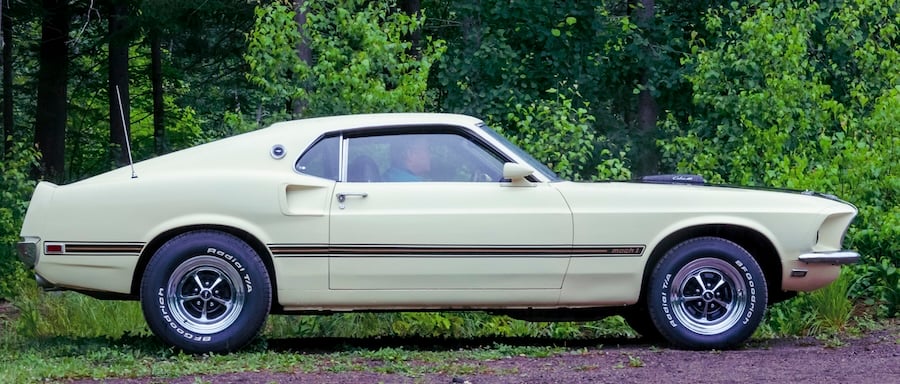
The 1969 Boss 302 and Boss 429 are top-shelf collectibles now, with Boss 429s trading in the six-figure range at major auctions. The 1969–70 Mach 1 with a 351 Cleveland offers serious muscle without the stratospheric price tag of a Boss car.
The Sleeper Play: 1971–1973
Most buyers skip these bigger-bodied Mustangs, but that’s starting to change. Auction trends show 1971–73 models are undervalued by roughly 25% compared to their 1969–70 equivalents with similar powertrains. A 1971 Mach 1 with a 351 Cleveland is a lot of car for the money right now.
What we see in the shop: First-gen Mustangs rust in predictable places. Check the cowl area first because cowl rust alone can cost thousands to repair, and that number climbs much higher when combined with floors, rockers, and full paint.
Floor pans, torque boxes, and the area around the rear leaf spring mounts are next on the list. For Texas buyers, cars from the Southwest avoid much of this and can save you tens of thousands in bodywork.
The Mustang II (1974–1978): Still the One to Skip
We won’t sugarcoat it: the Mustang II was built on the Pinto platform during the fuel crisis, and collector interest remains minimal. Even among vintage car enthusiasts who appreciate oddball cars, values have barely moved in decades.
The one exception is the 1978 King Cobra with the 302 V8. Production numbers were low, and a handful of collectors have started paying attention. But it’s a very thin market. Unless you find one cheap and have a personal connection to it, your money works harder in almost any other generation.
Fox-Body (1979–1993): The Gen-X Collector Wave
Here’s where the Fox platform market is getting interesting fast. Gen-X collectors now account for 44% of Fox-body insurance quotes according to Hagerty data, and they’re buying the cars they grew up with. Values on well-kept examples have nearly tripled over five years.
Best Year: 1989
The 1989 model year is the one enthusiasts keep coming back to. Ford switched to Mass Air Flow metering, added forged pistons, and included the desirable A9L ECU. These changes made the 1989 GT and LX 5.0 both more powerful from the factory and far more responsive to modifications, limited-slip differential included. If you’re buying a used Ford Mustang from this era for performance and collectibility, 1989 is the answer.
1993 SVT Cobra Jet
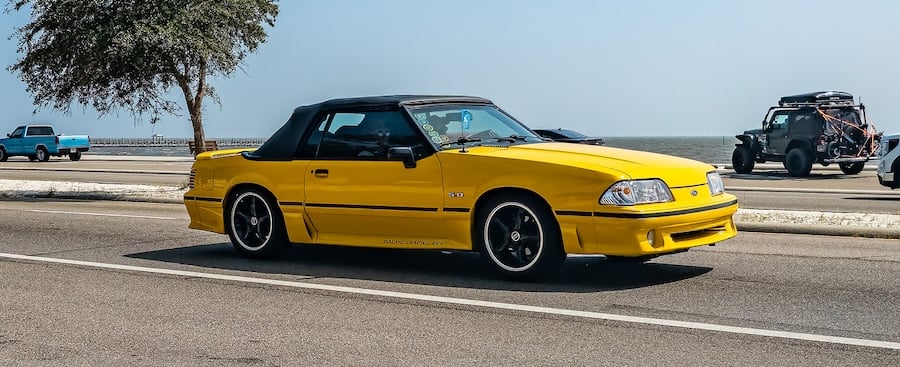
The first SVT Cobra Jet is rapidly becoming a blue-chip Fox-body. Clean examples trade between $35,000 and $45,000, and the ultra-rare 1993 Cobra R (just 107 built) commands $130,000–$200,000 or more, with low-mile examples pushing past $210,000 at recent auctions. These are serious collector cars now.
The Notchback Advantage
Fox-body notchback coupes (sedans) are rarer than the hatchbacks, weigh 200–300 pounds less, and carry a “sleeper” reputation that collectors prize. Clean LX 5.0 notchbacks have brought $60,000–$80,000 at auction in recent years. Keep an eye on these cars; they’re the definition of an undervalued Mustang right now.
What we see in the shop: Fox-bodies have three trouble spots to inspect before you buy. Strut tower rust is the big one because it’s structural and expensive to fix right. Torque box cracks show up on cars that have been launched hard. And the T5 manual transmission is known for third-gear synchro failure, especially on cars that have been modified.
The TFI (Thick Film Ignition) module on the distributor is another headache. It fails from heat and will leave you stranded. Most experienced owners relocate it to the fender well. If the seller hasn’t done this, factor it into your negotiation.
SN95 and New Edge (1994–2004): Hidden Gems for Smart Buyers
This generation gets overlooked by collectors focused on first-gen muscle and Fox-body nostalgia, especially V6 and V8 cars. That’s exactly why the values are so attractive right now.
Best Years: 2003–2004 SVT Cobra (“Terminator”)
The Terminator Cobra might be the best performance value in the entire Mustang lineup. A supercharged, iron-block 4.6L V8 making 390 horsepower with forged internals from the factory. These cars were overbuilt and respond to modifications like nothing else in this price range. Clean examples trade between $30,000 and $65,000 depending on mileage and condition.
Overlooked Gems
The 2001 Bullitt and 2003–2004 Mach 1 are quietly appreciating. Bullitt values average around $18,000, and the Mach 1 with its DOHC 4.6L and shaker hood scoop sits in the $15,000–$20,000 range for good examples. Compare that to the mechanically similar 1993 Cobra at $35,000-plus and you start to see the opportunity.
The 1996 Mystic Cobra is another one to watch. Only 1,999 were built with that color-shifting paint. Limited production plus visual drama tends to equal collector interest down the road.
What we see in the shop: If you’re looking at a 1999 Cobra, do your homework. That model year had a well-documented horsepower shortfall from the factory. Verify the intake manifold has been updated (look for blue or green dots). Also check for IMRC (Intake Manifold Runner Control) failures on 4.6L 4V engines from this era.
Fifth Generation S197 (2005–2014): Modern Muscle Car, Collector Potential
The retro-styled fifth generation brought the Mustang back to its roots visually. For collectors watching the market, two Ford Mustang models stand out.
Best Years: 2012–2013 Boss 302
The Boss 302 is already being called the last true naturally aspirated muscle Mustang. It’s a 444-horsepower 5.0L V8 paired exclusively with a manual transmission, race-tuned suspension, and a production run of just two model years. Values currently range from $25,000 to $50,000 for street-legal examples, depending on spec and condition.
The Laguna Seca edition (Boss 302LS) is even more limited and commands a further premium. These are cars built by enthusiasts for enthusiasts, and the market is starting to reflect that.
The GT500 Play
The 2013–2014 GT500 with its 662-horsepower supercharged 5.8L “Trinity” engine represents Carroll Shelby’s final direct involvement with the Mustang program. Average values sit in the $50,000–$60,000 range, and these cars have held their ground better than most high-performance models from this era.
Sixth Generation S550 (2015–2023): The Modern Classic
The sixth generation Mustang introduced independent rear suspension across the lineup, and that single change transformed the car’s handling and ride quality overnight. For enthusiasts thinking long-term, two variants are worth serious attention.
Best Model: GT350/GT350R (2016–2020)
The flat-plane crank “Voodoo” 5.2L V8 in the GT350 revs up to 8,250 RPM and sounds like nothing else Ford has ever built. We’ve had customers bring these in for service, and the whole shop stops to listen when one fires up. Ford has confirmed this engine will not be produced again. Values are climbing at roughly 3.3% year-over-year, and the GT350R with its carbon fiber wheels commands an additional premium. Of all the sixth-generation Mustangs, this is the one collectors are watching closest.
Best Model: GT500 (2020–2022)
The 760-horsepower “Predator” supercharged 5.2L makes the S550 GT500 the most powerful production Mustang ever built. Most examples trade near or above original MSRP. With the newest S650 unable to match these power figures, the GT500 looks increasingly like a collectible.
Seventh Generation Mustang S650 (2024–Present): Future Collectibles
The newest Mustang generation offers the rear-wheel drive layout and the 5.0L V8, making it one of the last new sports cars you can buy with a naturally aspirated V8 and a manual transmission. That combination alone is worth paying attention to.
The 2024 Dark Horse, with 500 horsepower and an estimated first-year production of around 4,000 units, is getting the most collector attention of any new Mustang right now. Whether it becomes a true collectible depends on production numbers and how long Ford keeps this powertrain alive. But if you want one, buying early and keeping the miles low is the traditional formula.
Who’s Buying Determines What’s Worth Buying
The biggest factor in the Mustang collector market is who’s buying them.
Millennials now account for 25% of classic car owners, and insurance quotes from younger collectors have jumped 270% since 2016. Combined with Gen Z, collectors under 45 represent 30% of the market. They’re buying the cars they grew up with, the ones they saw in movies and video games.
That means Fox-body Mustangs, SN95 Cobras, and early models like S197 Boss 302s are all entering the “nostalgia window” that drives collector demand. If you’re looking at Mustangs with appreciation potential, following this generational pattern is a smart strategy.
One more thing about manual transmissions: Across every Mustang generation, stick-shift cars command a 10% or greater premium over automatics. As fewer new cars even offer a manual, that gap keeps widening.
Before You Buy Any Collector Mustang
No matter which generation catches your eye, a few steps protect your investment:
Verify authenticity. For first-gen cars, check VIN stamps against engine casting numbers. Starting in 1968, Ford stamped the VIN on the engine block. For pre-1968 cars, date-code verification is critical. A Marti Report ($18–$275 depending on the level of detail) confirms factory build data for 1967-and-later Mustangs and is worth every dollar.
Inspect for rust with purpose. Every Mustang generation has specific rust-prone areas. We’ve outlined the big ones above. A magnet and a flashlight will tell you more than a fresh coat of paint ever will.
Get a professional appraisal. A certified appraiser who understands collector cars (not just used cars) protects you from overpaying and ensures proper insurance coverage. Agreed-value policies require professional documentation.
The Best Ford Mustang Year for You
The best Mustang year to buy is ultimately the one that connects with you. Maybe it’s the car you always wanted, the one your family owned, or the model that represents the best value in today’s market. Whatever pulls you in, make sure you buy smart, inspect thoroughly, and trust your project to people who understand these cars inside and out.
At Wilson Auto Repair, we’ve worked on Mustangs from every generation across more than 40 years in Dallas-Fort Worth. Whether you need a pre-purchase inspection, a full restoration plan, or help bringing a barn find back to the road, we’re here for it.
Call us at (972) 271-3579 or schedule a consultation to talk about your project.