

You’ve got a ’72 Chevy C10 that runs, drives, and turns heads at every gas station. But the passenger side bed molding is dented beyond saving, and that specific trim piece hasn’t been on a dealer shelf since the Carter administration. Now what?
That’s the reality of owning a vintage vehicle. The car or truck itself might be solid, but one missing or damaged part can stall a classic car repair project for months. And it’s not just rare trim. It could be a correct carburetor, a discontinued weatherstrip, or a taillight housing that no one seems to carry anymore.
Original classic car parts for vintage vehicles are getting scarcer every year. Suppliers close, warehouses get cleared out, and salvage yards that once held acres of golden-era American iron are shrinking. But the parts are still out there, if you know where to look and what to look for.
At Wilson Auto Repair, we’ve spent over 40 years tracking down parts for thousands of classic car restoration projects. This guide shares what we’ve learned about finding classic car parts, whether you’re doing the legwork yourself or working with a shop that knows the ropes.
Know Your Car Before You Start Searching
Before you start scrolling through listings or driving to the nearest auto salvage yard, do some homework on your specific vehicle. Knowing exactly what you need saves time, money, and a lot of frustration.
Start with your VIN. American automakers have used Vehicle Identification Numbers since the mid-1950s, though formats weren’t standardized until 1981. Even on older classics, the VIN tells you the model year, assembly plant, body style, and often the engine code. That information narrows your search immediately. A ’69 Camaro SS396 needs different components than a base-model ’69 Camaro, and the VIN confirms which one you’re working with.
Next, track down part numbers. Factory service manuals, parts books, and assembly manuals list the specific part numbers for every component on your car. These books are available through marque-specific clubs, online retailers, and sometimes free through enthusiast forums. Having the actual GM, Ford, or Chrysler part number (not just a description like “passenger side mirror”) lets you verify that what you’re buying is the correct piece for your year, model, and trim level.
Casting numbers matter too. Stamped right into the metal on engine blocks, heads, intake manifolds, and other iron or aluminum castings, these codes tell you the exact date and factory where the part was made. If you’re restoring a numbers-matching car, reading casting numbers is how you confirm authenticity. Even for a driver-quality classic car repair project, they help you avoid parts from the wrong year or application.
Online Marketplaces and Specialty Classic Car Parts Retailers
The internet changed parts hunting. What used to require months of phone calls and magazine classifieds can now happen in minutes. But you still need to know where to look.
eBay Motors remains the largest single marketplace for classic car parts. The selection is enormous, but so is the risk. Check seller ratings carefully, ask for detailed photos of the actual part (not stock images), and confirm return policies before you buy. For rare or expensive parts, ask the seller for casting numbers or date codes in the photos.
Hemmings has been a trusted name in the collector car world for decades. Their online marketplace connects buyers with both dealers and private sellers who specialize in vintage vehicles.
Facebook Marketplace and model-specific Facebook groups have become surprisingly productive in recent years. Groups dedicated to specific models, like “1967-69 Camaro Parts” or “Early Bronco Traders,” put you directly in contact with car enthusiasts who are parting out projects, clearing garages, or selling duplicates from their own collections.
Dedicated classic car parts retailers like Classic Industries, National Parts Depot (NPD), and Original Parts Group (OPGI) stock thousands of reproduction and OEM-style parts for popular American models. These companies publish detailed catalogs organized by year, make, and model, and most offer phone support from staff who know the cars. For common Chevy, Ford, and Mopar models from the 1950s through the 1980s, these retailers cover a huge percentage of what you’ll need.
Keep your expectations realistic when shopping online. Photos don’t always show the condition accurately. Shipping costs on heavy items like fenders, hoods, and bumpers can be steep. And not every seller knows the difference between a correct part and a close-but-wrong substitute.
Searching Auto Salvage Yards for Classic Car Parts
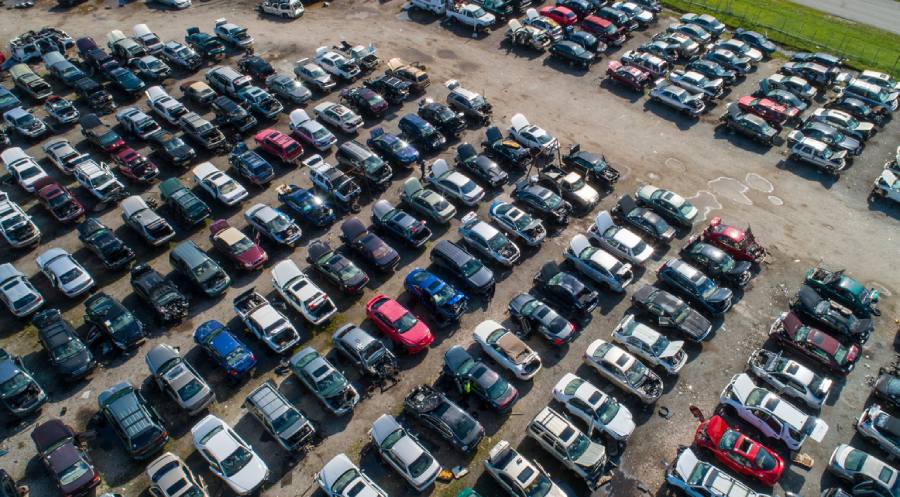
An auto salvage yard can be a great source for classic car parts, but they are dwindling in numbers. The typical pull-a-part junkyard with rows of wrecked Camrys and Accords is almost useless for classic car work.
Many standard self-service salvage yards primarily carry vehicles from the mid-1990s and newer. Some stretch back to the late 1970s, but if you’re looking for parts from the 1940s through the early 1970s, you need a specialty classic auto salvage yard.
These specialty yards are a different world entirely. They sit on acres of pre-1980s American cars and trucks, stocking the kind of inventory that standard yards simply don’t carry. Databases like Car-Part.com let you search specialty yard inventories remotely before making a trip, and sites like SearchTempest can scan Craigslist and Facebook Marketplace across multiple regions at once.
What to Look for at a Classic Salvage Yard
Not every part is worth pulling from a 50-year-old car in a field. Here’s what experienced restorers know:
Salvage yard gold: Trim pieces, emblems, door handles, window regulators, glass, instrument clusters, steering columns, and hard-to-find sheet metal panels. These parts are either discontinued by reproduction manufacturers or the reproductions don’t match the quality of the originals. Cast-iron and machined components like brake drums, spindles, and rear end housings often hold up well in salvage conditions.
Skip at the salvage yard: Rubber components (weatherstripping, bushings, seals), electrical wiring, and anything that degrades with UV exposure or moisture. These items are almost always better purchased new from a reproduction supplier. Gaskets, belts, and hoses should always be bought fresh.
Tips for a Productive Salvage Yard Visit
Bring your own tools. Most classic yards are self-service. Pack a basic socket set, wrenches, screwdrivers, pliers, a pry bar, penetrating oil (frozen bolts on old cars are guaranteed), and heavy gloves. A small flashlight helps for reading casting numbers in dim engine bays.
Know your measurements before you go. Bring the old part if you have it, or at least a photo and dimensions. Take your own reference photos at the yard before you remove anything. That way you know exactly how it was assembled.
Check for hidden damage. Run your hands behind panels to feel for rust-through or collision damage that’s not visible from the front. On mechanical parts, spin shafts and pull levers to check for wear. On chrome or stainless trim, look for pitting that no amount of polishing will fix.
The Clock Is Ticking on Salvage Yards
Classic auto salvage yards are disappearing faster than most car enthusiasts realize. Rising scrap metal prices, valuable real estate, and tightening environmental regulations have forced many legendary yards to close over the past two decades. In early 2025, CTC Auto Ranch in Denton, Texas, one of the largest classic-only salvage yards in the country with over 3,000 cars from the 1940s through the 1980s, shut its doors and began crushing most of its remaining inventory. The parts sitting in remaining classic yards are a finite and shrinking resource. If you know you need something, don’t wait.
Swap Meets, Car Shows, and Car Clubs
Some of the best parts deals happen face-to-face. Swap meets at major car shows bring together vendors who carry everything from NOS parts still in the original packaging to used trim pieces pulled during restorations.
In the Dallas-Fort Worth area, events like the Pate Swap Meet in Fort Worth (one of the largest in the country) draw hundreds of vendors each spring. Local cruise nights and car shows are worth attending even if you’re not showing. Conversations with other car enthusiasts often lead to parts sources you’d never find online.
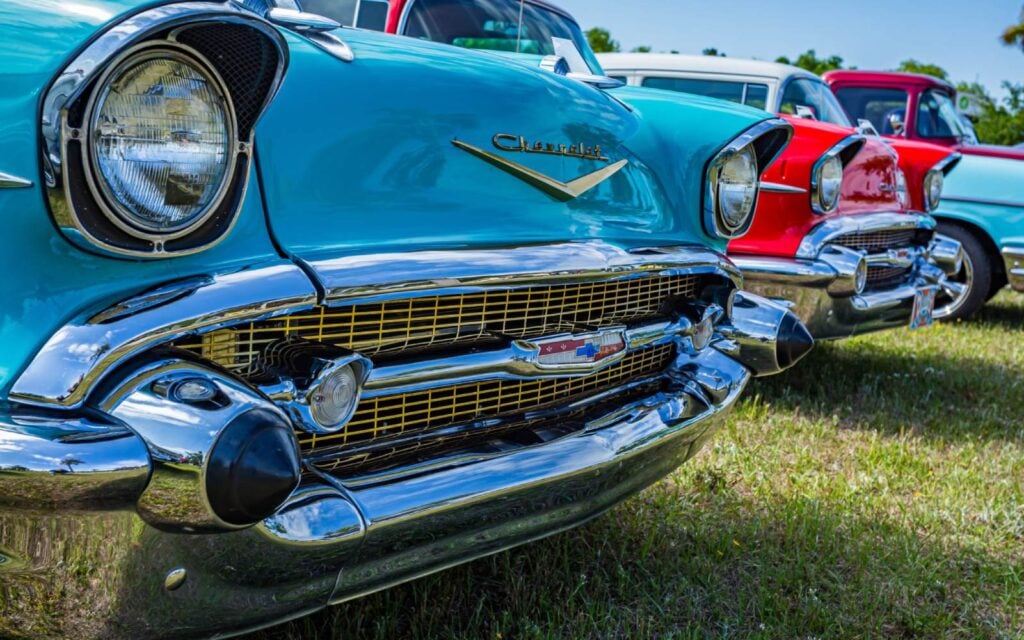
Model-specific car clubs and online forums are another strong resource. Members share parts leads, group-buy opportunities on reproduction runs, and decades of knowledge about what crosses over between years and models. The Vintage Mustang Forum, HAMB, and brand-specific groups through organizations like the Antique Automobile Club of America (AACA) are all active communities where parts leads get shared regularly.
Reproduction Parts vs. NOS vs. Salvage Originals
Not all classic car parts are created equal, and picking the right type for your project matters.
NOS (New Old Stock) parts are original manufacturer parts that were never installed. They’ve been sitting in a warehouse, dealer’s back room, or collector’s shelf for decades. NOS parts are the gold standard for authenticity, but they’re increasingly rare and often carry premium prices.
Reproduction parts are newly manufactured replacements designed to fit your specific vehicle. Quality varies dramatically between manufacturers. Some reproduction parts are virtually identical to the originals. Others are close-enough approximations that may need fitting or modification. For popular models like the Camaro, Mustang, and Chevy C10 truck, the reproduction market is robust and generally high quality.
Salvage originals are used parts pulled from donor vehicles. They carry the authenticity of original manufacture but may need repair and replacement of wear items, reconditioning, or cosmetic restoration. Buying a salvage part is often just step one: media blasting, rust treatment, replating, and reassembly bring that part back to usable condition.
For a concours-level restoration where every detail gets judged, original and NOS parts matter. For a reliable driver or a restomod build, quality reproductions often make more sense from both a cost and reliability standpoint.
When the Part Simply Doesn’t Exist
Sometimes the part you need hasn’t been manufactured in 40 years, there’s no NOS stock left anywhere, and every salvage yard has come up empty. This is where classic car repair gets creative, and where the difference between a general mechanic and a restoration specialist really shows.
Skilled fabricators can reproduce metal panels, brackets, and structural components from scratch. It starts with measurements or patterns from the original (or from a similar car), and the new piece gets hand-formed, welded, and fitted to match. This kind of repair work is common for rust-damaged floor pans, trunk floors, and one-off body panels that reproduction companies never bothered to make.
Wilson Auto Repair’s in-house machine shop and fabrication facility handles exactly this kind of work, crafting custom components to spec when off-the-shelf options simply don’t exist.
For smaller plastic and rubber components (knobs, trim clips, emblems, and interior pieces), casting and molding techniques are becoming more accessible. These methods are filling gaps that used to mean years of searching.
Cross-referencing is another tool in the experienced restorer’s kit. Many GM, Ford, and Chrysler parts were shared across multiple models and years. A window regulator from a ’68 Chevelle might fit a ’68 El Camino. A dashboard pad from a two-door might swap into a four-door. Knowing these interchanges comes from experience, or from working with a shop that’s built thousands of these cars.
Why a Restoration Shop’s Parts Network Beats Solo Searching
You can find a lot of classic car parts on your own. But there’s a reason experienced classic auto restoration shops find them faster.
After 40-plus years of restoration and auto repair work, Wilson Auto Repair has built a parts network that individual buyers simply can’t match. We know which vendors carry what, which reproduction manufacturers make the best-quality pieces for specific applications, and which salvage connections have the rare stuff that never hits eBay.
We’ve also seen tens of thousands of cars come through our shop, which means we know the cross-references, the substitutions that work, and the ones that don’t. When a part search hits a dead end, we know whether fabrication, modification, or a creative alternative will get the job done right.
Parts sourcing can be one of the most time-consuming parts of any classic car repair or restoration. If you’d rather spend your time driving than searching, that’s what we’re here for.
Ready to talk about your classic car project? Call Wilson Auto Repair at (972) 271-3579 or visit us at 3133 Saturn Road in Garland, Texas. Whether you need help finding parts, planning a restoration, or keeping your classic running with regular maintenance services, we’ve been doing this since 1980, and we’d love to help with your project.