


Rust is one of the most common and misunderstood problems classic car owners face. It can start as a small blister under the paint and quietly spread into structural damage that threatens the safety, value, and longevity of the car.
Maybe you recently inherited a classic that’s been sitting under a tarp for years. Or you’ve watched small rust spots slowly spread on a car you’ve owned for decades. Either way, classic car rust repair can feel overwhelming, especially when you’re not sure where to start or who to trust with something this personal.
Rust on a classic car is almost never a death sentence. With the right approach and the right help when you need it, most rust damage can be repaired, reversed, or stopped from spreading further.
At Wilson Auto Repair, we’ve spent over 40 years bringing rusted classics back to life throughout the Dallas area. We’ve restored everything from light surface spots to cars that looked hopeless. We know what works, what doesn’t, and when it’s time to call in professional help.
This guide covers everything you need to know:
- How to identify the three stages of classic car rust (and why it matters)
- Where rust attacks first on vintage vehicles
- When DIY works versus when you need professional classic car rust repair
- How to prevent rust from coming back, especially in Texas climates
- What repairs actually cost so you can make informed decisions
Whether you’re protecting a family heirloom or deciding whether an inherited project is worth saving, this information will help you move forward with confidence.
Understanding the Three Stages of Classic Car Rust
Not all rust is created equal. Knowing what stage you’re dealing with determines your repair approach, timeline, and costs.
Surface Rust: Catch It Early
Surface rust is the earliest and easiest stage to address. You’ll see orange-brown spots where paint has chipped or worn away. The metal underneath is still solid; press on it, and nothing gives.
At this point, the damage is purely cosmetic. Surface rust responds well to sanding, rust converter, and fresh primer. This is your window for affordable repairs. Left alone, it always progresses to something worse.
Scale Rust: The Clock Is Ticking
Scale rust develops when surface rust goes untreated. The corrosion thickens and starts eating into the metal, causing pitting and flaking. Paint bubbles up from beneath. When you touch the affected area, bits of metal may crumble away.
Scale rust requires more aggressive treatment, including wire brushes, grinding, and often body filler to smooth the pitted surface. It’s still manageable on non-structural body panels, but you’re now racing against time.
Penetrating Rust: Professional Territory
Penetrating rust is the serious stuff. The corrosion has eaten through the metal completely, leaving holes and compromising structural integrity. Poke it with a screwdriver, and it goes right through.
This stage requires professional classic car rust repair, like cutting out the damaged sections and welding in new metal. There’s no DIY shortcut that produces safe, lasting results.

Where Rust Attacks Classic Cars First
All classic cars have predictable weak points where moisture collects, and protection fails. Regular inspection of these areas helps catch rust on classic cars before it spreads.
Where Rust Becomes a Deal-Breaker
Frame rails represent the most serious concern. Extensive frame rust often makes restoration economically impossible except for rare, high-value vehicles. If you’re evaluating a car to buy or restore, frame condition should be your first priority.
The Usual Suspects
Rocker panels are rust magnets on nearly every classic make and model. These multi-layer structures trap moisture inside, and by the time rust breaks through to the surface, significant damage has almost always already occurred. On unibody cars like Mustangs, rockers are structural, not cosmetic. Clogged drain holes at the bottom accelerate the problem.
Floor pans suffer from water that leaks in and pools beneath carpets. The damage can hide for years before you notice soft spots under your feet. Pay special attention to the driver’s footwell and seat mounting areas.
Wheel wells and fender bottoms take constant abuse from road spray and debris. Check where the wheel wells meet the trunk floor, because those seams are always vulnerable.
Trunk floors collect standing water from deteriorating seals, especially in the spare tire well. Lift the carpet and inspect it carefully on a regular basis.
Other common trouble spots include door bottoms (where drain holes clog), battery trays (acid accelerates corrosion), cowl vents, kick panels, and quarter panels.
Why Classic Cars Are Especially Vulnerable to Rust
If you’ve wondered why your 1960s or 1970s classic rusts faster than modern vehicles, the explanation comes down to manufacturing history.
The Galvanization Gap
Galvanized steel, metal coated with zinc for rust protection, wasn’t widely adopted by American automakers until the 1980s. Cars from the golden era of American muscle used unprotected steel that was vulnerable from the factory floor.
According to Hagerty, Chrysler’s own data from the era showed that one in five cars in winter climates developed rust holes after just two years! And more than half did after another two years. That was new cars. Add another 50-60 years of exposure, and even well-maintained classics typically reveal hidden corrosion once you strip the paint.
Factory Paint Limitations
Original factory paint systems offered far less protection than modern formulations. Rust-inhibiting primers and UV-protective clear coats didn’t become standard until the 1970s.
Design Challenges
The complex body designs of that era, all those folds, seams, and enclosed spaces, created perfect moisture traps. Water gets in, can’t get out, and corrosion starts from the inside.
Early undercoating products sometimes made things worse. Applied incorrectly, they trapped moisture against the metal instead of keeping it out.
How to Fix Rust on Cars: DIY vs. Professional Repair
The biggest question most owners face: Can I handle this myself, or do I need professional classic car rust repair?
The answer: it depends.
When DIY Makes Sense
DIY works for surface rust on non-structural panels. If the metal is still solid and you’re dealing with cosmetic damage on fenders, doors, or hood, you can tackle it with patience and about $50-150 in materials.
The basic process:
- Sand progressively from coarse (60-grit) to fine (400-grit), removing all rust down to bare metal
- Apply rust converter to chemically stabilize any remaining oxidation
- Prime with self-etching epoxy primer (2-3 coats)
- Finish with color-matched touch-up paint
Take your time and work in a well-ventilated area. Safety equipment isn’t optional! Eye protection and a respirator are mandatory when sanding and painting.
When to Call a Professional
Professional classic car rust repair is the right call when you’re dealing with:
- Any structural rust (frame rails, floor pans, rocker panels, torque boxes)
- Penetrating rust that’s created holes in the body panel
- Rust in enclosed areas like door cavities or rocker panel interiors
- Scale rust covering large areas or multiple panels
- Any situation where the “poke test” fails (screwdriver goes through the metal)
Why This Matters
Improper DIY repairs on structural components create real safety risks. Badly welded patches can fail in a collision. Rust trapped under amateur repairs spreads faster than if you’d left it alone. And poor-quality work tanks your car’s value. Experienced buyers can spot amateur bodywork from across the parking lot.
Classic Car Rust Prevention: Protecting Your Investment
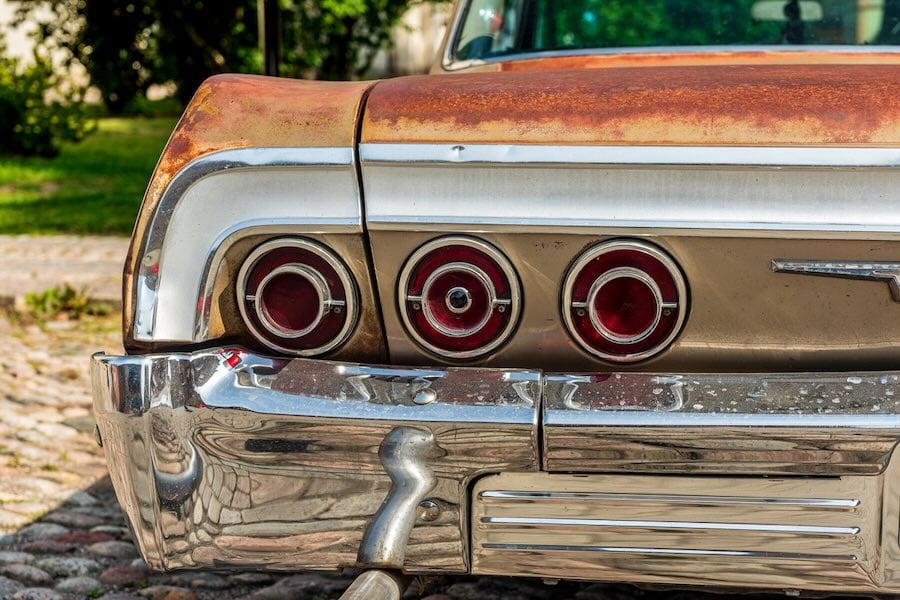
Preventing rust costs far less than repairing it. Here’s how to keep your classic protected for years to come.
Storage Is Important
Climate-controlled storage maintaining 50-70°F and 40-55% humidity is the gold standard. Steel starts corroding more aggressively above 60% humidity. Climate-controlled environments can reduce the risk of corrosion by up to 90% compared to uncontrolled spaces.
If climate control isn’t possible, run a dehumidifier to keep relative humidity below 50%. Always store on concrete, never on gravel or dirt, which release moisture from below.
Choose the Right Protective Coatings
For classics with existing surface rust, oil-based products like Fluid Film or WoolWax penetrate and displace moisture. They need annual reapplication but provide ongoing protection.
For rust-free vehicles, wax-based undercoating provides durable, long-term protection.
Critical warning: Never apply rubberized undercoating over existing rust. It traps moisture and accelerates hidden damage, doing exactly the opposite of what you’re trying to accomplish.
Cavity wax protects internal panels, frame rails, and enclosed areas that external sprays can’t reach. But keep in mind that the application requires specialized wands to access door skins, rocker panel interiors, and frame members.
Inspect Regularly
Check your common rust zones monthly. Treat any chips or scratches immediately because bare metal exposed to air starts oxidizing right away. Catching rust on classic cars early is always cheaper than fixing it later.
Classic Car Rust Prevention in Texas
Texas owners face specific challenges even without road salt:
- Summer heat exceeding 100°F stresses coatings, seals, and rubber components
- UV exposure degrades paint and clear coat faster than in northern climates
- Gulf Coast humidity affects vehicles for miles inland; some sources cite effects extending 20-30 miles from the coast
If your classic came from the Houston, Galveston, or Corpus Christi area, inspect it extra carefully. Coastal Texas vehicles can rust up to 20% faster than inland cars due to salt air exposure.
When Rust Repair Costs More Than the Car Is Worth
Sometimes the smartest decision is knowing when to walk away. Not every classic can, or should, be saved.
Frame Rust Is Usually the Threshold
If frame rails, suspension mounts, or other structural members show significant rust-through, repair rarely makes financial sense except for rare, high-value vehicles like Shelbys, Boss Mustangs, or documented muscle cars.
Multiple structural areas affected simultaneously, like rusted frame rails, rockers, torque boxes, and floor pans, typically pushes repair costs into the $30,000–$40,000+ range. Sadly, that exceeds the restored value of most common classics.
Questions to Ask Before Committing
Before writing any checks, do the math:
- What is my car worth, fully restored? (Check Hagerty’s valuation tools for realistic numbers)
- What’s the realistic total repair cost? Be sure to include a 10-20% contingency for hidden damage
- Would buying a rust-free example be cheaper? Often, the answer is yes
Rust Repair Reality Check
For most common classics, driver-quality repairs provide a better return on investment than show-quality restoration. The goal is to keep the car safe and enjoyable and not necessarily concours-perfect.
As experienced restorers often point out, the finished car rarely commands a market value that covers professional restoration costs. Restore because you love the car, not because you expect to profit.
Your Classic Deserves Expert Care
Rust doesn’t have to be the end of your classic’s story. Whether you’re protecting a family heirloom that your grandfather drove off the lot or breathing life into a barn find you inherited last year, the right repair approach makes all the difference between preserving memories and losing them to corrosion.
The key is honest assessment. Know what you’re dealing with. Understand when DIY makes sense and when professional classic car rust repair is the smarter path. And work with people who’ll tell you the truth about what your car needs, not what they want to sell you.
At Wilson Auto Repair, we’ve spent over 40 years helping Dallas-area classic car owners protect and restore their vehicles. We’ve handled everything from simple surface rust to complete structural rebuilds on thousands of classics. We know these cars matter to you, and we’ll give you an honest assessment of what yours needs and what it will cost without any surprises or unnecessary pressure.
Ready to get your classic back on the road? Call us at (972) 271-3579 or contact us to schedule a consultation. Let’s talk about what’s possible for your car.
Further Reading
- 5 Classic Car Storage Tips for Winter – Prevent rust before it starts with proper seasonal storage
- Classic Car Restoration Services – Learn about Wilson Auto Repair’s complete restoration process
- Hagerty Valuation Tools – Research your classic’s market value before making restoration decisions
- Classic Motorsports: Replacing Rocker Panels – Technical deep-dive on one of the most common rust repairs