

That Camaro in your garage isn’t just metal and chrome.
Maybe it’s Dad’s graduation gift that’s been waiting twenty years for its second chance. It could be the ’72 Bronco you’ve dreamed about since high school. Or that Chevelle that’s been in the family since it rolled off the lot.
These cars are pieces of your story. And choosing the wrong restoration shop could turn your dream into a nightmare that costs both money and memories.
At Wilson Auto Repair, we’ve spent 40 years bringing classics back to life. After thousands of restorations, we’ve pretty much heard it all: shops vanishing with deposits, cars held hostage, or projects dragging on for years with nothing but excuses.
The stories we hear would make your blood boil. And honestly, they make ours boil too.
Here’s what most guides won’t tell you about finding a classic car mechanic: Technical skill is just the starting point. What really matters is trust, transparency, and finding someone who gets what your classic means to you.
Whether you’re in Dallas, Fort Worth, or anywhere across Texas, let’s walk through exactly how to spot the good guys from the bad, and protect yourself along the way.

Why Your Classic Needs a Specialist (Not Just Any Mechanic)
Modern mechanics speak computer, but classic car mechanics speak carburetor.
There’s no laptop that’ll diagnose why your ’69 Camaro stumbles off idle. That takes experience, a good ear, and understanding mechanical systems they stopped teaching decades ago.
Your classic runs on completely different principles. Take that four-barrel carb: it doesn’t adjust itself like modern fuel injection. When the weather changes here in Texas (and boy, does it change), someone needs to tune it by hand. Drum brakes need periodic adjusting. Points need setting. And if you weld that mild steel body wrong, you’ve got permanent damage that’ll haunt you forever.
Then there’s the puzzle of the parts. We still see shops trying to jam metric fittings onto SAE threads and using the wrong brake fluid that’ll eat your seals. Or here’s a costly one: modern oil that lacks the zinc your flat-tappet cam needs. One wrong fluid, and you’re looking at an engine rebuild in months, not years.
Down here in the Dallas-Fort Worth area, our blazing sun beats the tar out of interiors while our periodically dryer climate (minus the summer) keeps most rust at bay. That’s a whole different ballgame from what coastal or northern shops deal with. A restoration shop that knows Texas will know these realities and build accordingly.
Five Questions to Ask Any Classic Car Repair Shop
1. “Can I drop by anytime to see my car?”
The answer better be yes. Period.
Any shop playing hide-and-seek with customer visits is hiding something. Here at Wilson, folks drop by all the time. Want to see your Mustang on the rotisserie? Come on over. Excited about that fresh paint job on your Bronco? We’ll brew the coffee.
Watch out for shops that only allow “scheduled visits” or need “advance notice for insurance.” That’s usually code for “your car isn’t here” or “we’re a hot mess.”
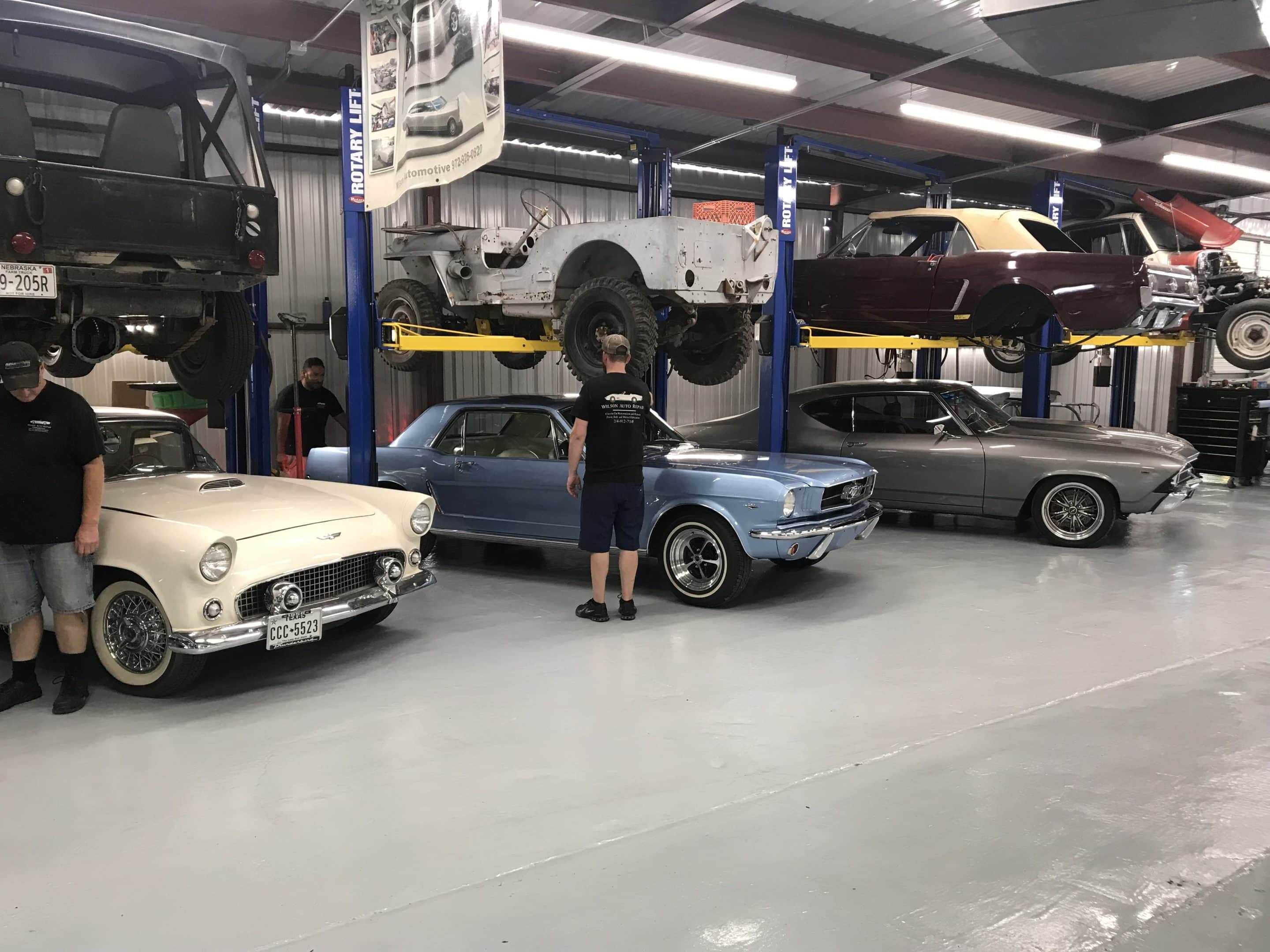
We love having visitors come by our shop to see what we’re working on
2. “What’s your payment setup?”
Good shops bill monthly for work that’s actually done. Not massive deposits or payment in full upfront, but monthly bills you can see, verify, and understand.
After four decades, we’ve learned milestone billing protects everyone. You pay for progress you can touch, and we get paid for work we’ve completed. Simple as that.
Run from anyone wanting 50% upfront or full payment before starting. Standard practice is small deposits (under 10%) for special-order parts only. Everything else should be pay-as-you-go.
3. “What certifications do y’all have?”
ASE certification is the gold standard: it means technicians passed serious tests and know their stuff. I-CAR Gold Class is for shops that go above and beyond in collision repair. Good to have, but here’s what really matters: ask about their experience with YOUR type of car.
How many ’69 Camaros have they done? Can they show you photos? After thousands of classic auto restorations, we’ve seen every Mustang, Bronco, muscle car, and classic truck configuration multiple times. That pattern recognition (knowing what goes wrong with specific models) saves you serious money.
4. “How do you document the auto restoration process?”
Professional shops pay attention to detail and provide comprehensive documentation:
- Weekly photo updates showing progress
- Detailed parts inventories with sources
- Labor logs documenting hours by task
- Quality control checkpoints at each phase
This documentation protects your investment, supports insurance valuations, and becomes part of your car’s permanent history. Shops avoiding documentation often hide substandard work or inflated billing.
5. “How long will it really take?”
Let’s be honest here. Good work takes time.
- Driver-level restoration: 6-12 months minimum
- Show-quality: 18-24 months
- Concours-level: 2-3 years (yeah, years)
Anyone promising major restoration in 90 days is either lying or planning to butcher your baby. Quality means taking time to do it right the first time.
Red Flags That Should Have You Running for the Door
Four decades in this business teaches you to spot trouble fast. Here’s what should send you packing:
The Shop Itself:
- No real address (or they won’t tell you where they are)
- Working out of their backyard
- Cars scattered everywhere like a junkyard
- Can’t show you proper insurance papers
- Won’t put anything in writing
How They Talk:
- Get defensive when you ask for references
- Can’t answer basic technical questions
- Promise the moon (“Complete restoration for $15,000!”)
- Push you to decide RIGHT NOW
- Won’t let you see current projects
Money Troubles:
- Want huge deposits upfront
- Cash only, no checks or cards
- Suddenly change the price after starting
- Hold your car hostage for “surprise” charges
Stories of customers losing tens of thousands with nothing to show are all too common. Don’t become another cautionary tale.
What Real Excellence Looks Like at a Classic Car Mechanic (So You Know It When You See It)
Walk into a legitimate restoration shop, and you’ll feel the difference immediately:
The Shop: Everything has its place. Customer parts are labeled and organized. You’ll see proper equipment: lifts, rotisseries, real spray booths. Not a disaster zone that looks like a tornado hit.
The People: Technicians who love talking about their work (and can explain it without talking down to you). Specialists who focus on their craft: paint guys do paint, mechanical guys do mechanical. The best shops have teams that’ve worked together for years, passing knowledge between generations.
The Process: Real contracts that spell everything out. Regular updates without you having to chase them down. Photos you can access showing your car’s progress. When surprises pop up (and they will), they explain what happened and what it’ll cost before touching anything.
The Proof: Happy customers who’ll actually talk to you. Families that keep coming back: Dad’s Mustang, then their Camaro, then Junior’s Bronco. That’s when you know you’ve found the real deal.
Why Texas Shops Get Texas Cars
The Dallas-Fort Worth classic car scene is something special. AutoRama packs the convention center. GoodGuys brings thousands of beauties to the Texas Motor Speedway. Every weekend, there’s a Cars & Coffee or cruise-in somewhere.
This runs deeper than just weekend hobby stuff; it’s in our blood.
Texas cars face Texas problems:
- Summer heat that’ll cook a cooling system designed for Ohio
- Sun that fades paint faster than you can say “lacquer”
- Thankfully minimal rust (unlike our poor friends up north)
Local knowledge matters. We know to beef up cooling systems for August in Arlington. We use paint formulas that laugh at UV rays. We understand that a numbers-matching Texas truck is worth its weight in gold to collectors nationwide.
Making Your Decision: A Strategic Framework
Phase 1: Research and Verification
Start with Better Business Bureau (BBB) ratings, Google reviews spanning multiple years, and classic car forum discussions. Join Facebook groups for your specific model and ask about shop experiences. Contact local car clubs for more intel.
Phase 2: Initial Contact Assessment
Professional shops respond promptly with helpful information, not just sales pitches. They ask intelligent questions about your goals, budget, and timeline. They invite facility tours without hesitation. They provide clear, detailed estimates after thorough inspection.
Phase 3: Deep Dive Evaluation
Visit during working hours to see actual operations. Meet the technicians who’ll handle your car. Review current projects at various stages. Check references with specific questions about timeline accuracy, cost overruns, and communication quality. Verify insurance, licensing, and certifications.
Phase 4: Contract Negotiation
Never accept vague agreements. Contracts should specify exact work scope, payment milestones tied to completion, realistic timelines with update requirements, and procedures for handling unexpected issues. Quality shops welcome detailed contracts, knowing they protect everyone.
Time to Turn That Dream Into Chrome and Horsepower
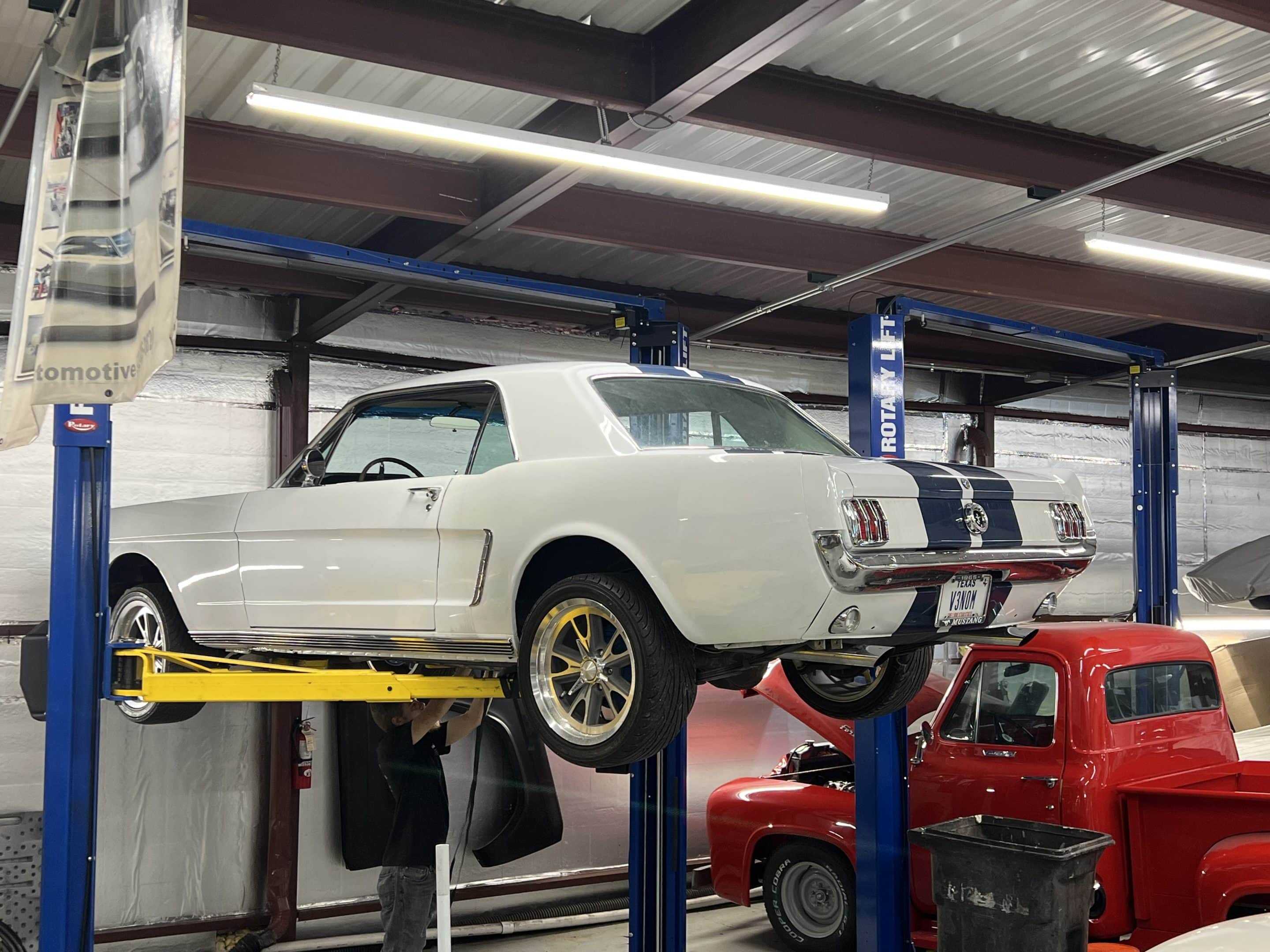
Choosing the right classic car repair shop means finding someone who gets it: they understand that your ’69 Camaro is transportation back to being seventeen again.
Your classic deserves better than crossed fingers and hope. Take time to ask the hard questions. Visit shops. Check references. Trust your gut when something feels off.
At Wilson Auto Repair, 40 years and many thousands of restorations have taught us one thing: every classic has a story worth saving. We’ve seen grown men cry when their dad’s old truck fires up again. We’ve watched families pass down Mustangs like heirlooms. We get what these cars mean.
The right classic car restoration shop understands memories, respects heritage, and keeps promises. Your classic has waited long enough. When you find that shop, you’ll know it. And when you do, something magical happens.
Ready to bring your classic back to life? Let’s talk about what’s possible.
Further Resources for Classic Car Owners
For deeper insights into classic car restoration and preservation:
- Classic Motorsports Magazine: Technical articles and restoration guides covering vintage vehicle ownership
- Vintage Mustang Forum: Model-specific community for restoration experiences and shop recommendations
- SEMA (Specialty Equipment Market Association): Industry news, shop directories, and restoration standards
- Hagerty Classic Car Insurance: Valuation tools, restoration cost guides, and educational resources